Round dining tables
Complete your dining area.
Choose chairs for your tableFilters0
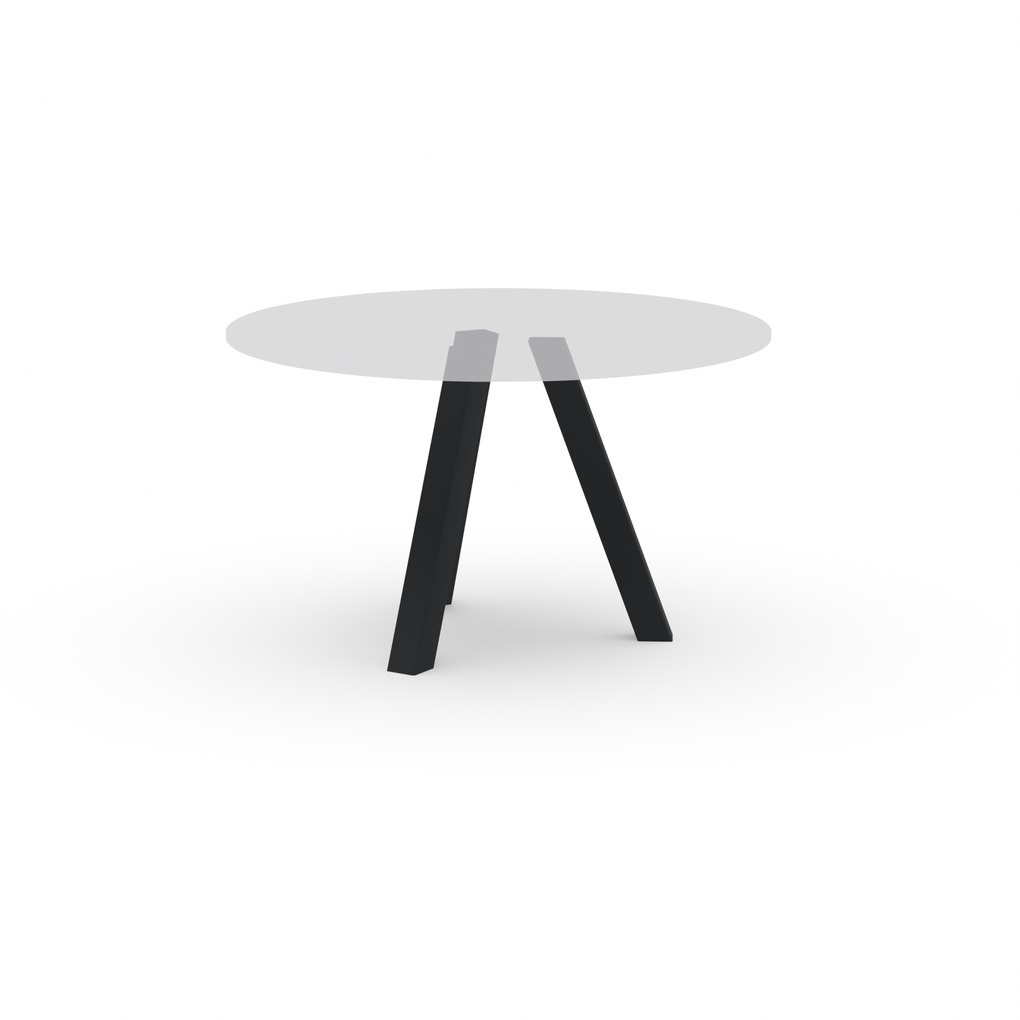
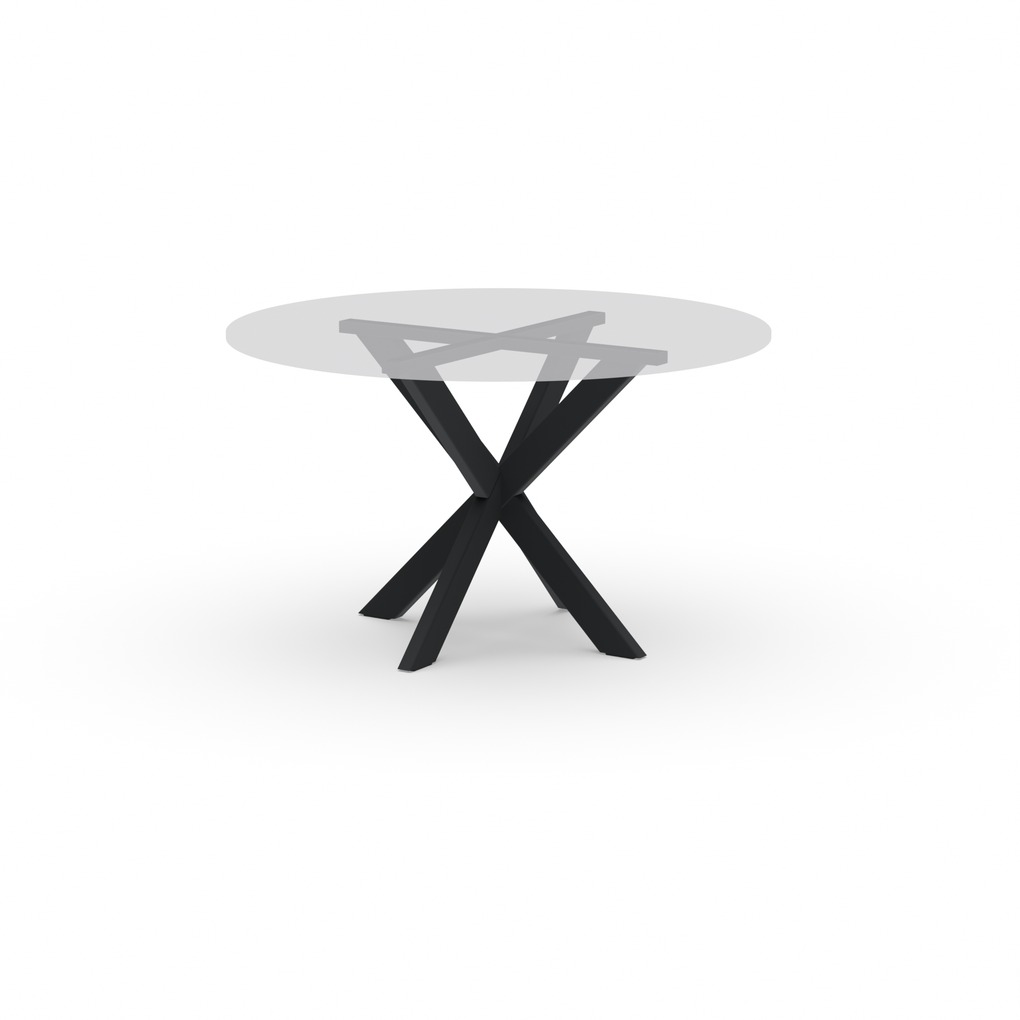
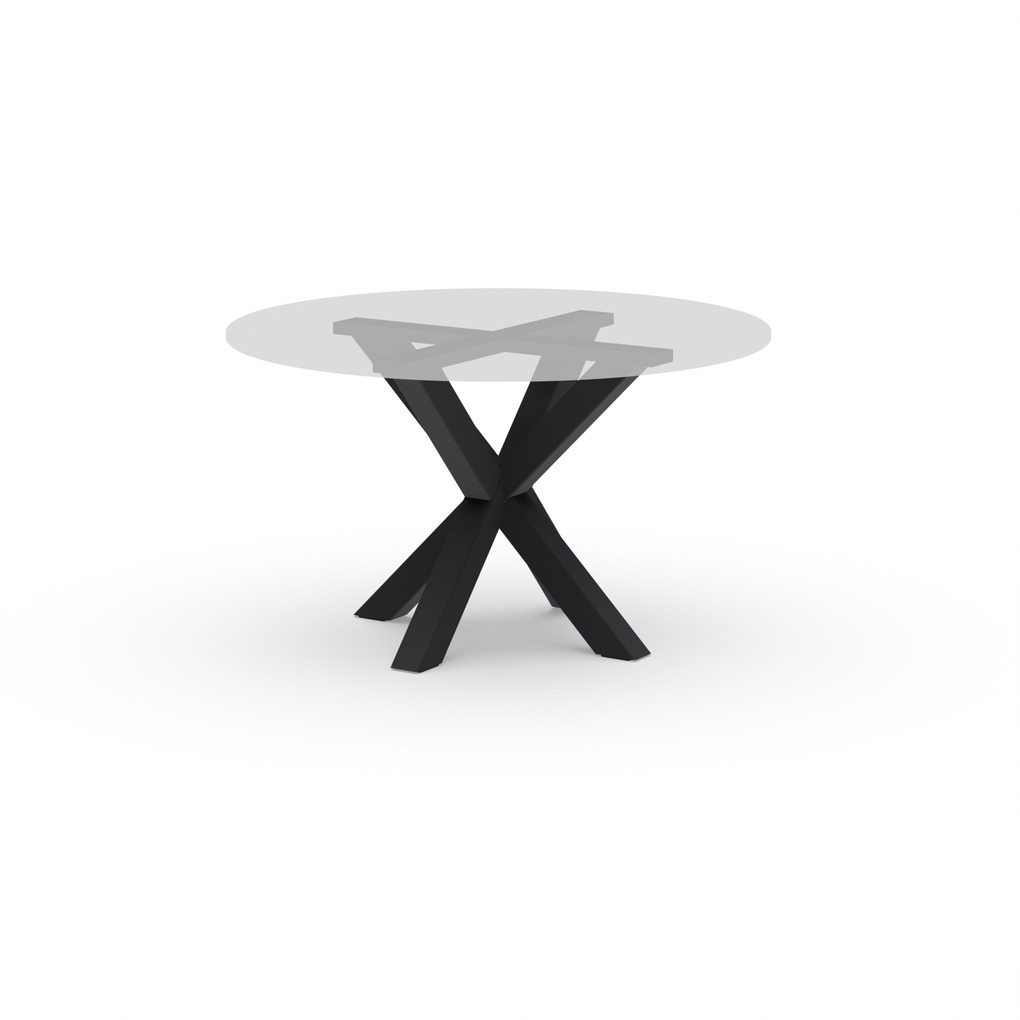
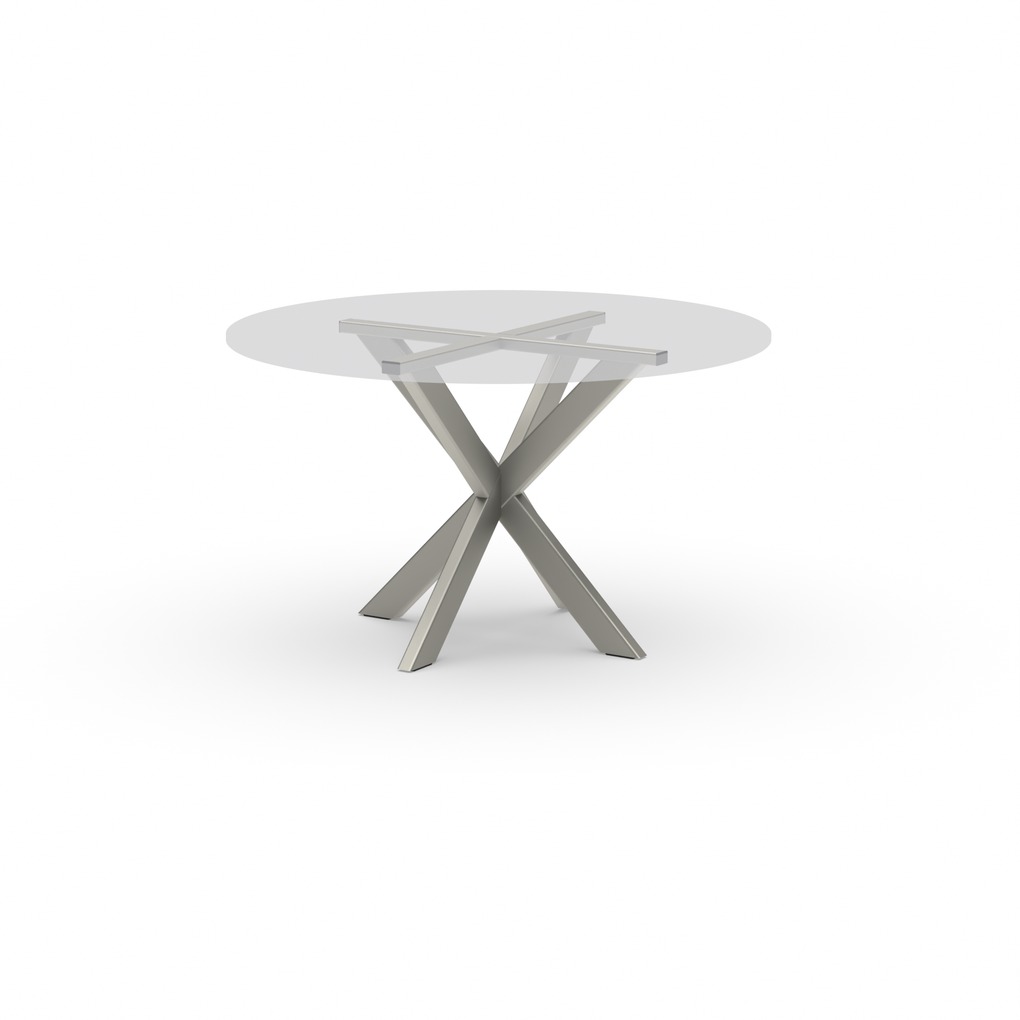
21 products




No products match this combination
Adjust or remove a filter to see results again.

Looking for a round dining table made to measure that suits your room, your household and your interior? The first question is not which diameter, but which material. This page compares ceramic, solid oak and walnut, with a diameter guideline per number of people.
A round table asks for different choices than a rectangular one. Everyone sits in the same circle, no corners get in the way, and the table reads lighter in a room. The material then decides how large the table may become and whether it may stand outdoors.
Quick decision guide per situation, before you read on.
- Busy household or a table that is in use all day: ceramic.
- Warm, classic dining room with a wooden floor: solid oak in a matching stain colour.
- Dark and exclusive interior: walnut with chocolate brown tones.
- Table on the terrace or in the veranda: ceramic, the only top that may stand outside.
- Diameter larger than 130 cm: ceramic, which runs on to 160 cm.
Round ceramic dining table: hard, heat resistant and up to 160 cm
A round ceramic dining table takes daily life without showing traces. You put down a hot pan, someone draws straight through the paper, and red wine does not soak in. That makes ceramic the most carefree top of the three materials.
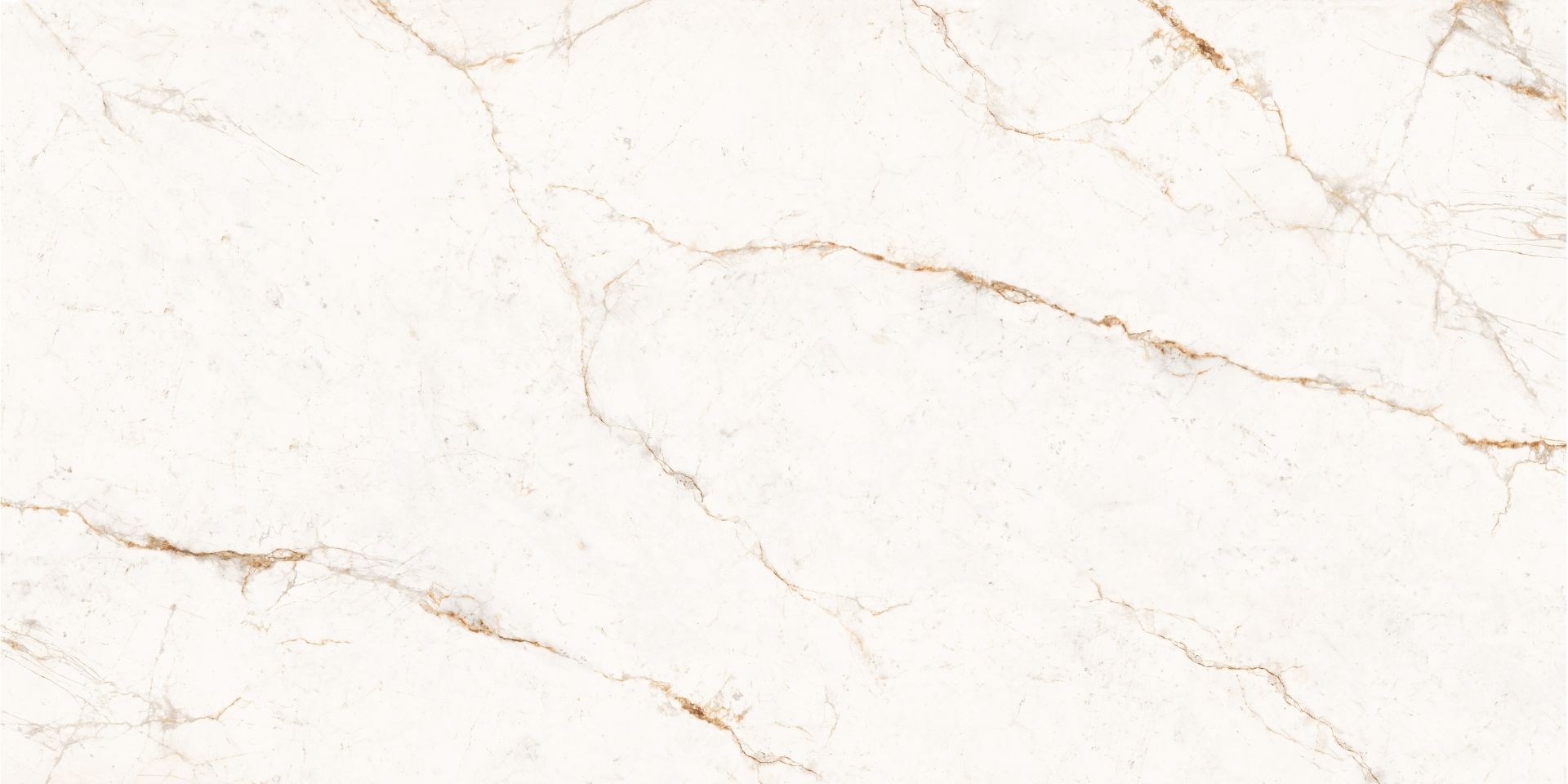
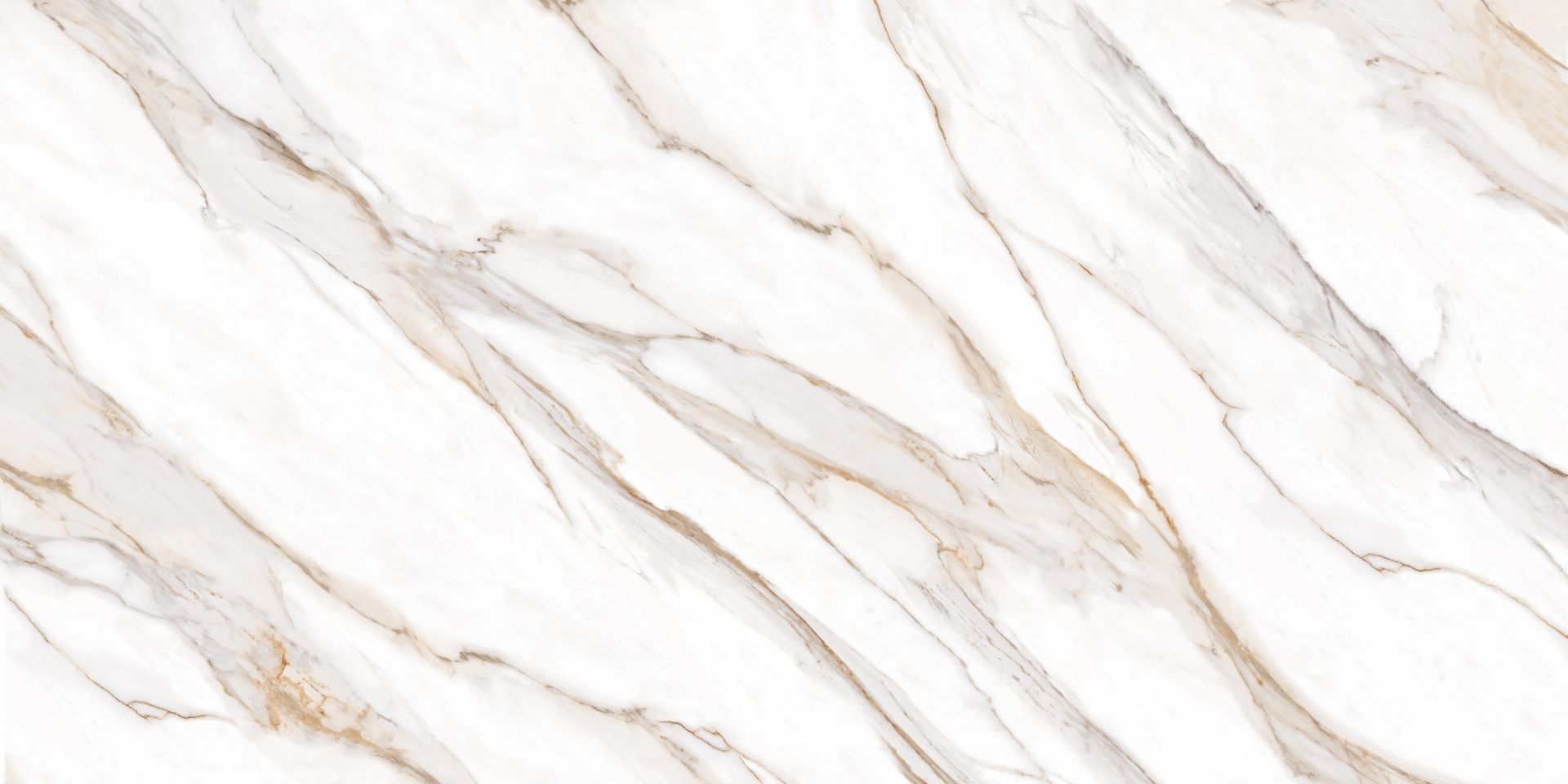
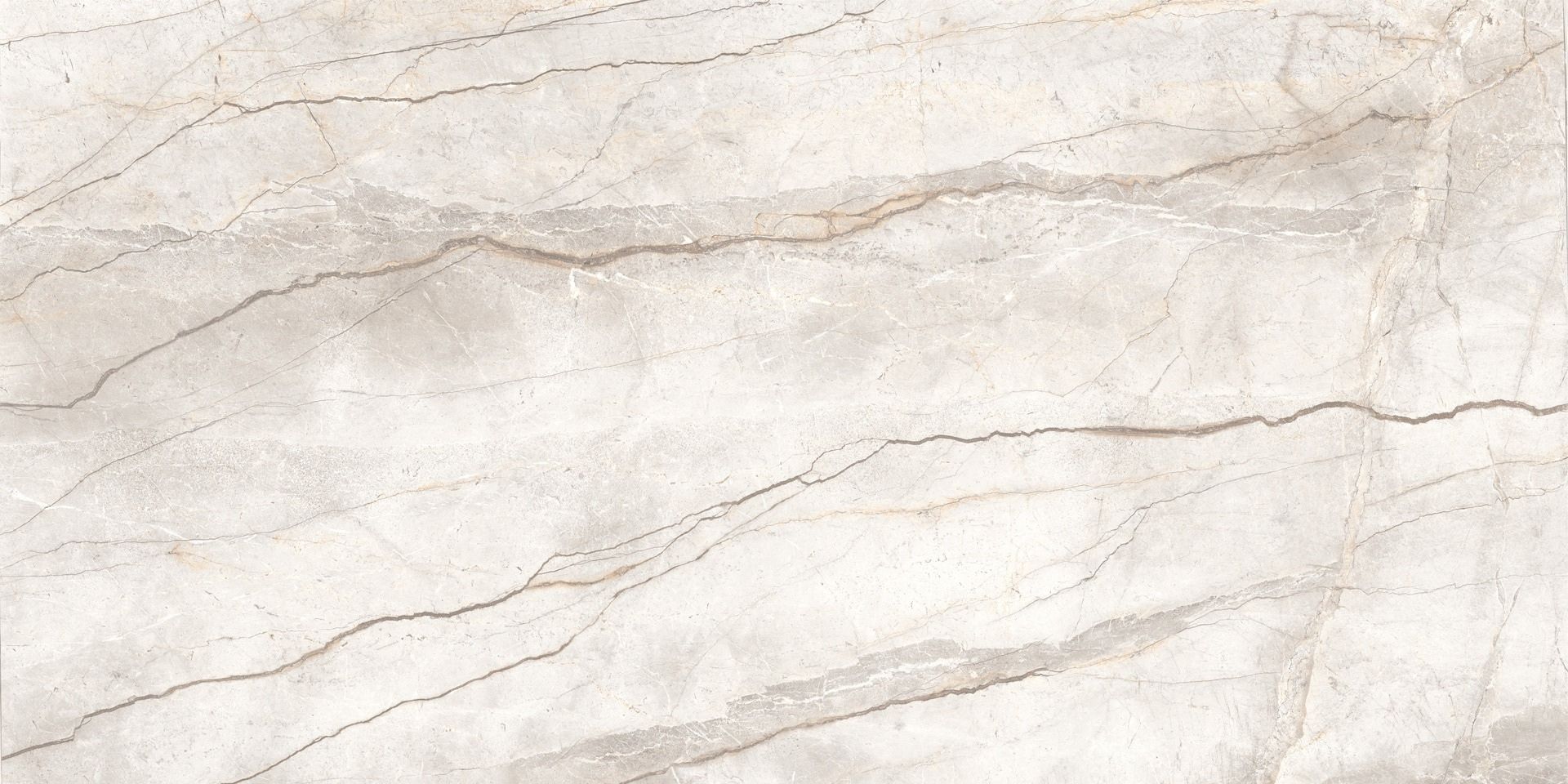
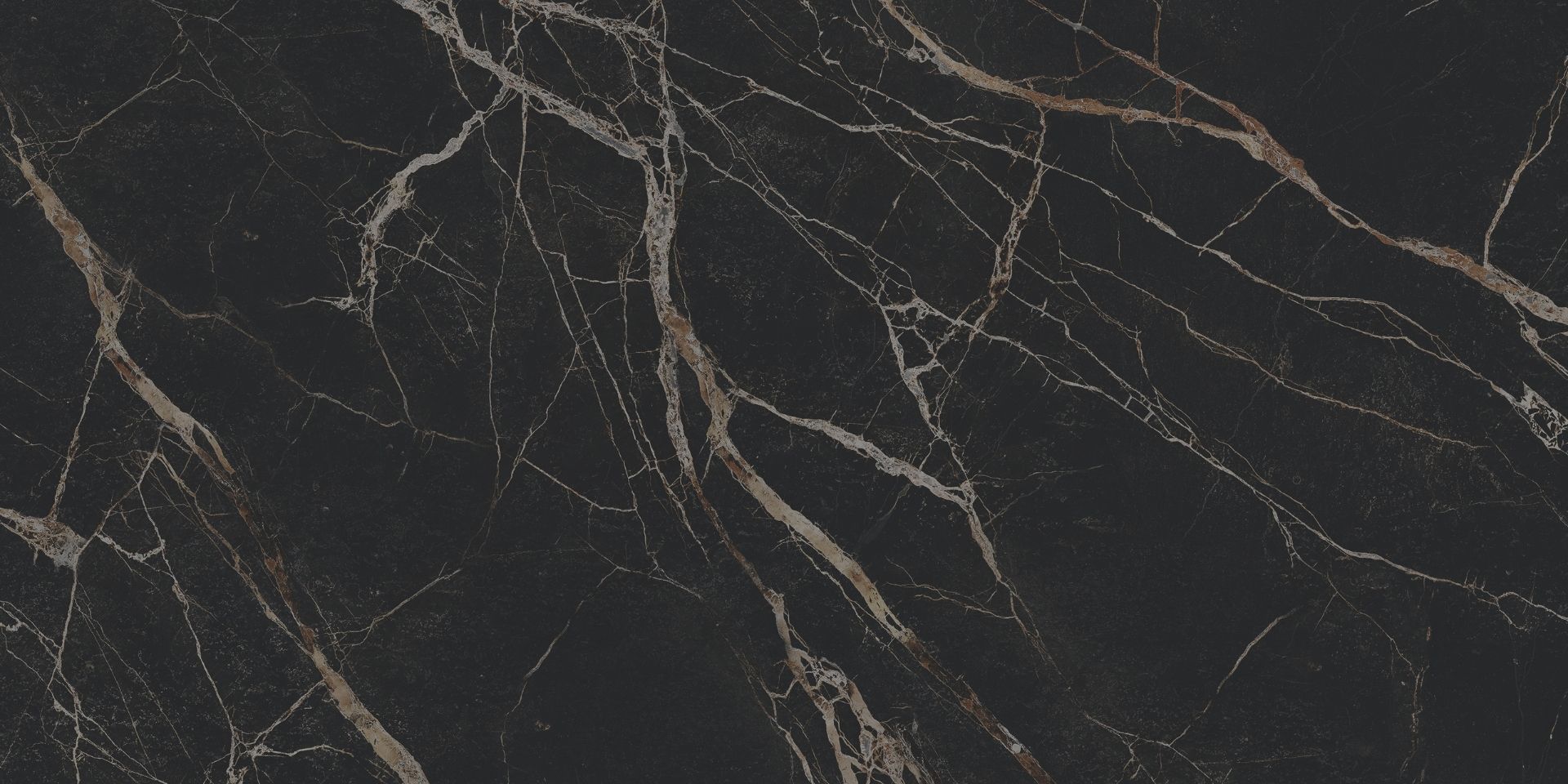
Sintered ceramic is fired at extremely high temperature, which leaves the top hard and gives it very low porosity. You choose from 29 colours, from a light marble look to deep anthracite, in a top of 12 mm thick. The material is UV resistant and therefore suited to indoor and outdoor use.
Honest about the drawback: ceramic is heavy and sensitive to hard point loads on the edge. A heavy pan that lands exactly on the rim can cause damage. Browse the round ceramic dining tables or the full range of ceramic dining tables.
In daily use the colour choice weighs heavier than the technical description. A light marble look keeps a small dining room open, while anthracite makes the table the darkest surface in the room. Because a circle has no corners, the colour reads as one continuous plane from every seat.
Round oak dining table: warmth, open grain and 19 stain colours
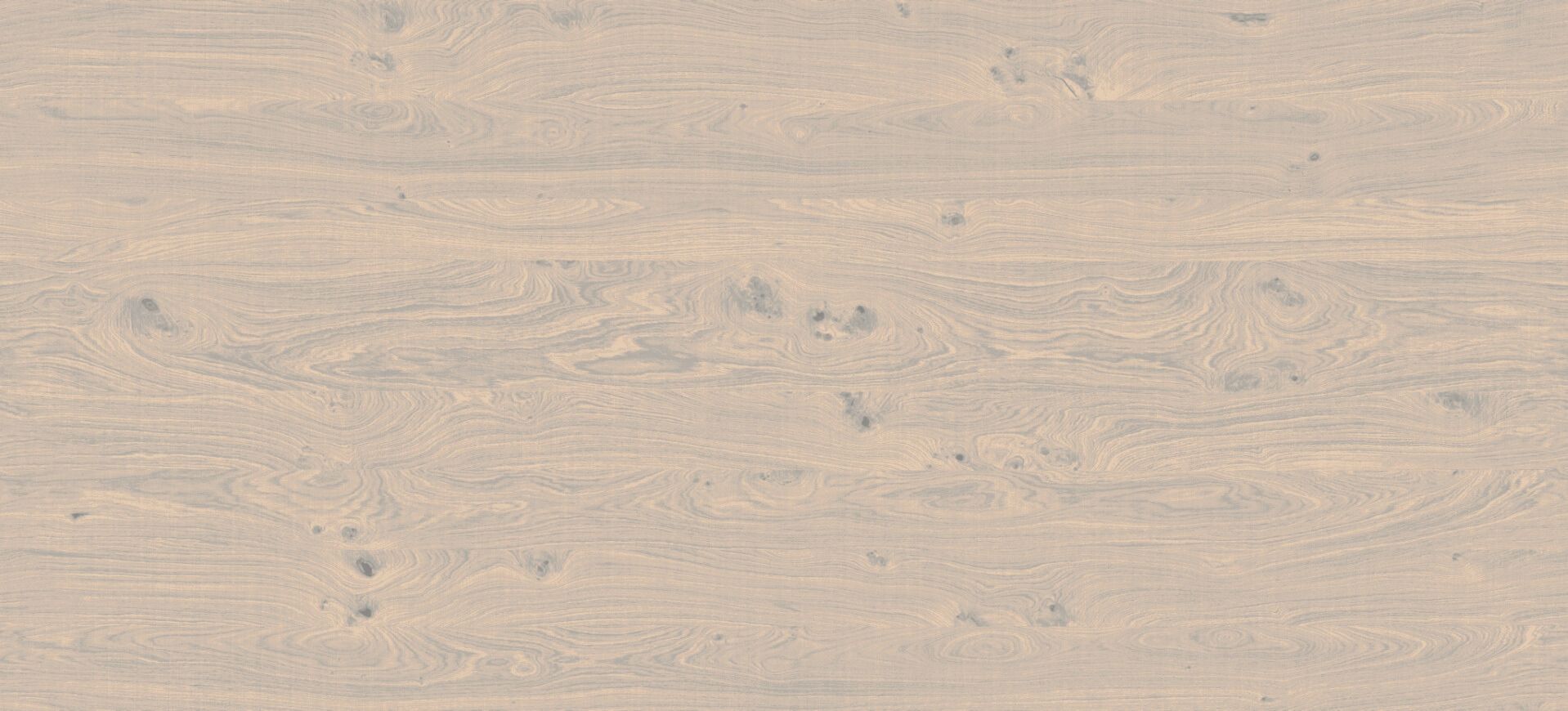
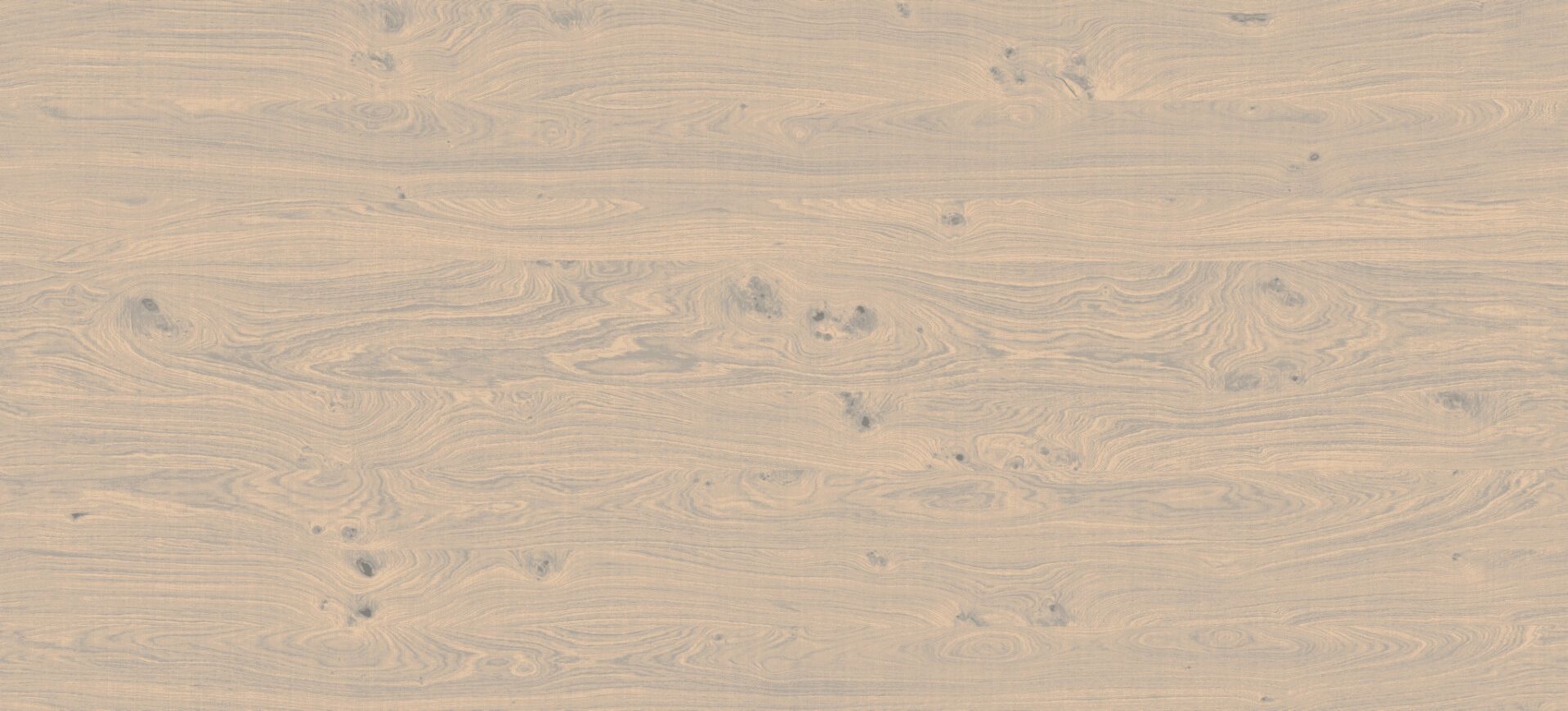
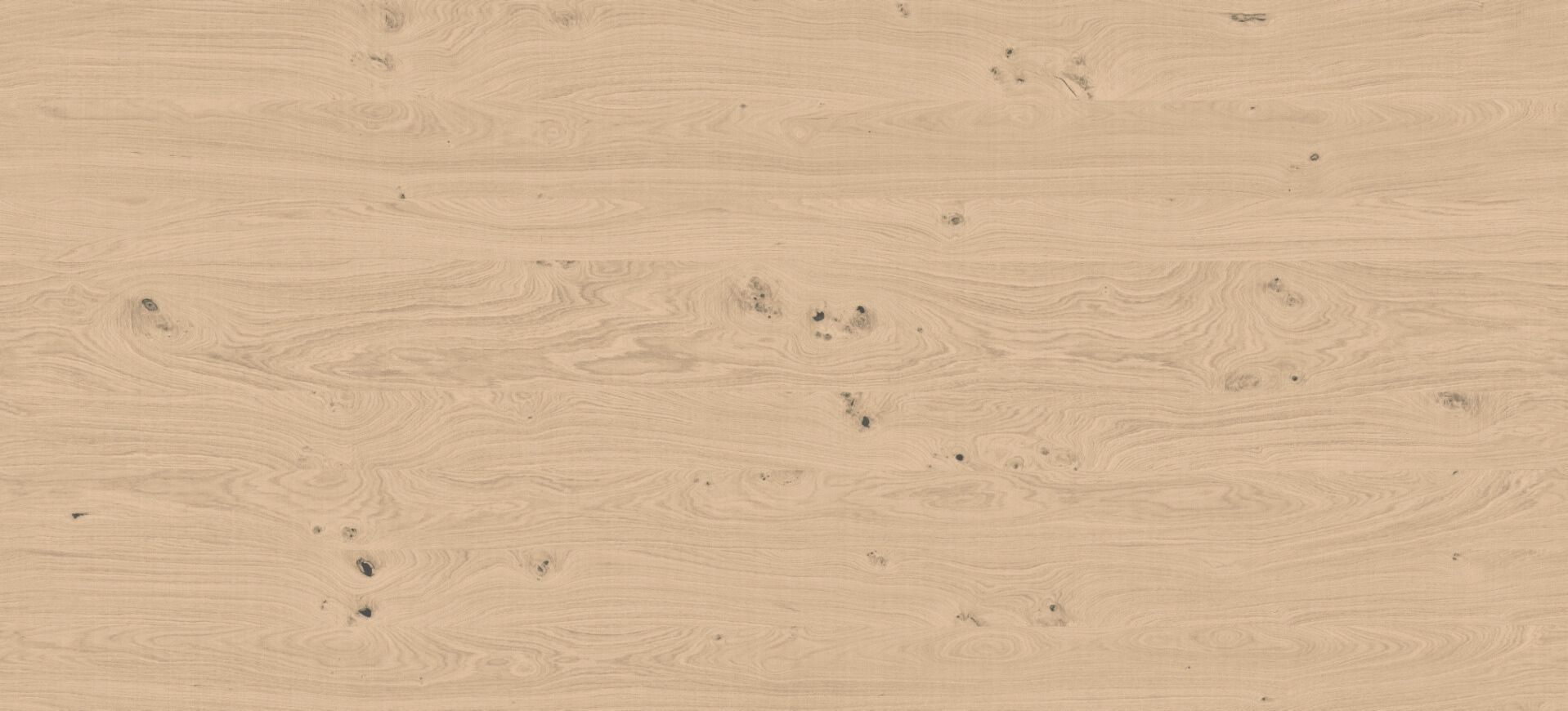
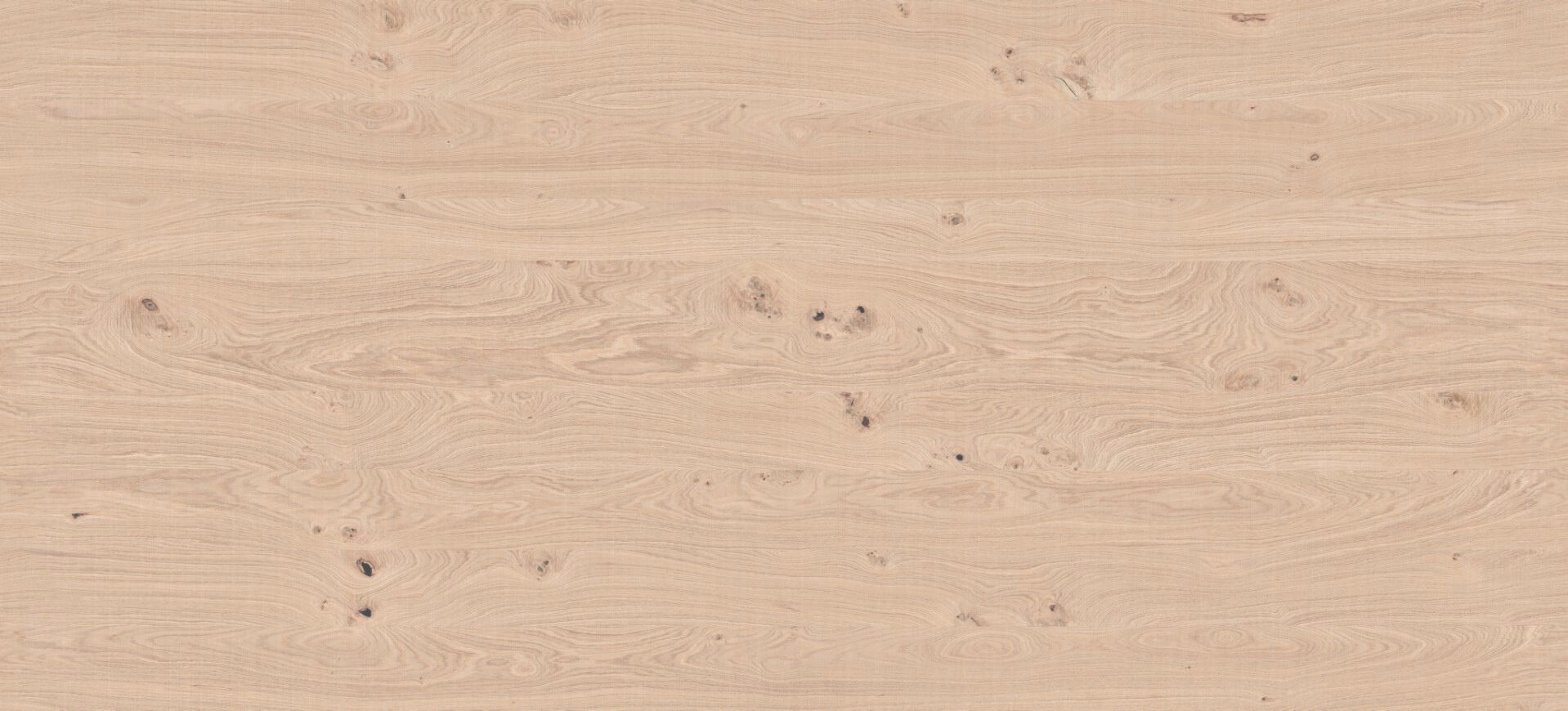
Solid oak gives a round table a warmth that no other material comes close to. The open grain runs in a continuous pattern across the round top, and the timber grows deeper and warmer in colour over the years. Damage is not the end of the road either, because the top can be sanded back.
The top is 40 mm thick solid European oak. You choose from 19 stain colours in honey to golden brown tones, finished with two coats of clear matt 2K lacquer. That lacquer build keeps the surface matt and easy to clean with a damp cloth.
Oak is meant for indoor use and is not suited to the terrace. The maximum diameter in oak is 130 cm. More examples are shown at round oak dining tables and in the wider category of oak dining tables.
On a round top the grain is visible from every side, which is exactly where the calm of this material comes from. The pattern continues across the circle instead of stopping at a hard line. Over the years that surface records the household, and a sanding cycle sets it back to the beginning.
Round walnut dining table: the most exclusive timber
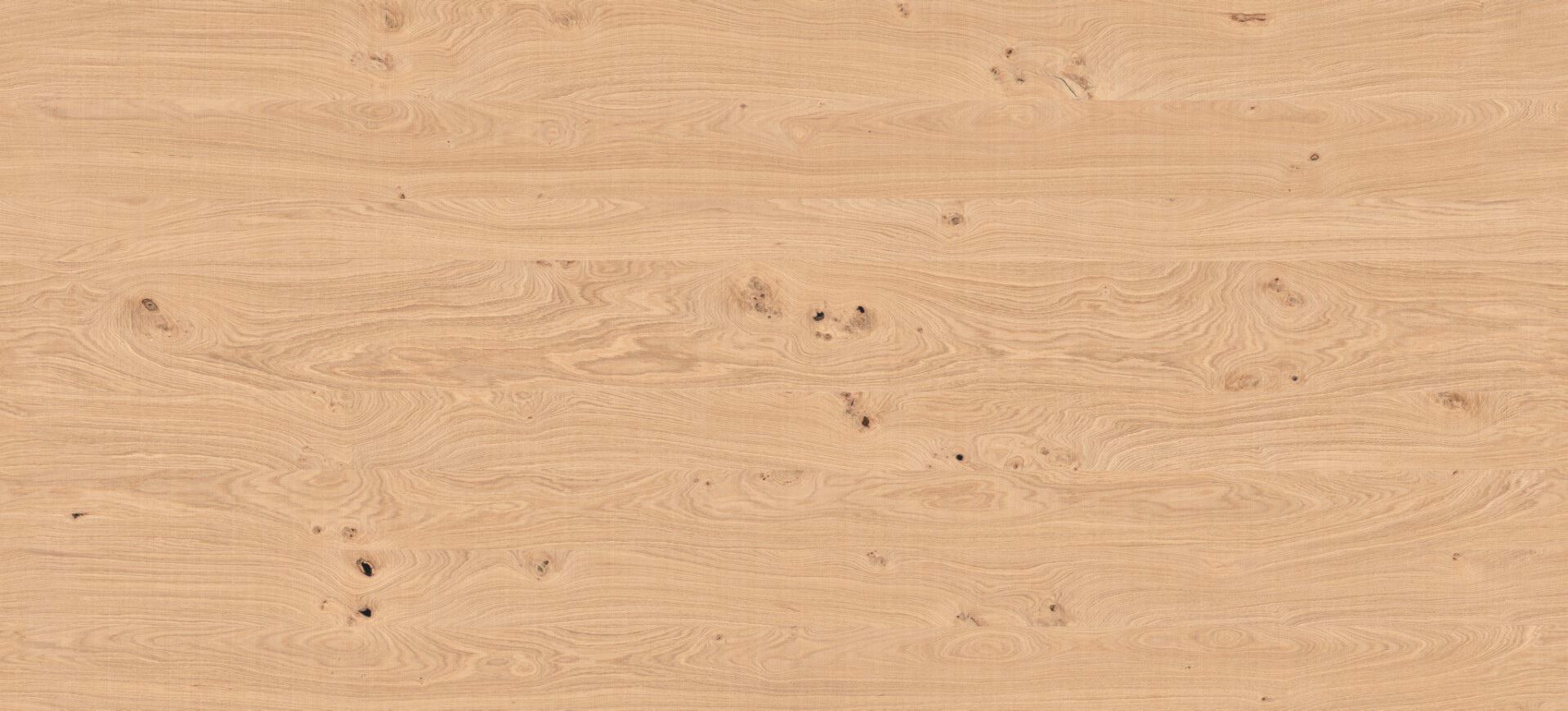
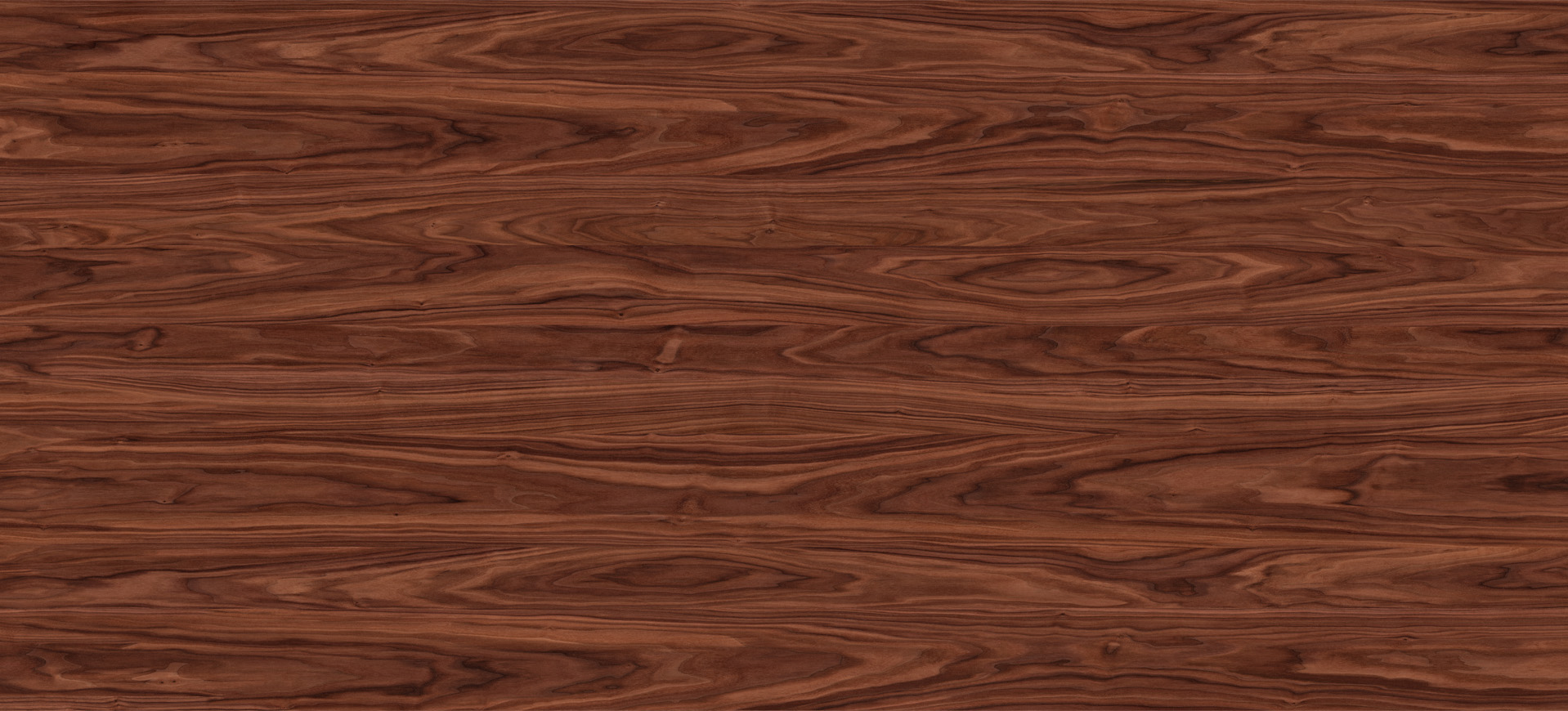
Walnut gives a round table a character of its own from the first moment. The colour is deep chocolate brown with purple undertones, so the table keeps speaking in a dark interior as well. Of the three materials this is the most exclusive timber.
Walnut is lighter in weight than oak and still dimensionally stable, in the same top thickness of 40 mm. The finish matches that of oak: a stain of your choice plus two coats of clear matt 2K lacquer. Here too the maximum diameter is 130 cm.
Under prolonged direct sunlight walnut can lighten slightly. UV blockers in the lacquer limit that effect, but they do not cancel it out completely. More about this timber is shown at walnut dining tables and in the overview of wooden dining tables.
Because walnut already carries depth of colour, it asks less of the rest of the room. A light floor and pale walls give the table the space to be the darkest plane present. In a dark interior the same table reads as a continuation rather than a contrast.
How many people fit around a round dining table?
With a round table you calculate from the circumference, not from the length. The circumference is pi times the diameter, and per person you allow 70 to 75 cm of width. This table is an arithmetic guideline, not a fixed standard.
| Diameter | Circumference | Guideline seats | Available in |
|---|---|---|---|
| 100 cm | 314 cm | 4 | ceramic, oak, walnut |
| 110 cm | 346 cm | 4 | ceramic, oak, walnut |
| 120 cm | 377 cm | 4 to 5 | ceramic, oak, walnut |
| 130 cm | 408 cm | 5 | ceramic, oak, walnut |
| 140 cm | 440 cm | 6 | ceramic |
| 150 cm | 471 cm | 6 | ceramic |
| 160 cm | 503 cm | 6 to 7 | ceramic |
Read the table as an upper limit for comfortable seating. The position of the base counts as well: a central base leaves the chairs free, while legs at the rim can block a seat. If you sit with a fixed six, 140 cm in ceramic is calmer than 130 cm in wood.
A round table is more flexible than a rectangular one when an extra guest arrives. Because a circle has no corner seat, everyone shifts along a little and in practice another chair often fits. Only do not count that place as a permanent seat.
If you want more seats than a round shape allows, an elongated shape is the more logical route. In that case compare with the oval dining tables or the Danish oval dining tables. A table made to measure is produced to the millimetre, so in between sizes such as 125 or 138 cm are possible too.
Space and clearance: why a round table reads lighter
In the same room, a round table reads lighter than a rectangular one. There are no corners interrupting the walking line, so you pass the table more easily. In smaller dining rooms and in open kitchen diners that works directly in your favour.
Allow at least 80 cm of clearance all around the table. That is the room needed to push a chair back and walk past it. With a table of 130 cm you therefore need a clear area of roughly 290 cm.
Measuring in three steps before you settle on a diameter.
- Measure the shortest clear wall to wall distance in the room and subtract two times 80 cm.
- Put that result next to the table above and choose the nearest diameter.
- Mark the circle on the floor with tape and walk around it for a day.
The standard table height is 76 cm. When choosing chairs, take the armrest height into account so the chairs fit under the top. The dining chairs category shows which models suit a round table.
A round shape also changes how the room is used outside mealtimes. Without corners you walk past the table on a curve, which keeps a narrow passage workable. That is why a circle often earns its place in a room where a rectangle would feel tight.
Ceramic, oak or walnut: the comparison
The table below sets the three materials side by side on the points that make the difference in practice. Use it together with the decision guide at the top of this page. The advice per situation follows underneath.
| Property | Ceramic | Solid oak | Walnut |
|---|---|---|---|
| Appearance | crisp and minimalist, from marble look to anthracite | warm and classic, open grain | dark and exclusive, purple undertones |
| Scratch resistance | scratch resistant thanks to the sintered structure | 2K lacquer protects, top stays sandable | 2K lacquer protects, top stays sandable |
| Top thickness | 12 mm | 40 mm | 40 mm |
| Colour options | 29 colours | 19 stain colours | 19 stain colours |
| Maintenance | damp cloth, heat and stains are no problem | damp cloth, no abrasive cleaners | damp cloth, limit direct sunlight |
| Suitable outdoors | yes, UV resistant | no | no |
| Maximum diameter | 160 cm | 130 cm | 130 cm |
If you choose on carefree use, ceramic wins. Heat, scratches and stains are simply not a subject, and the diameter runs on to 160 cm. The weight and the sensitivity of the rim to point loads are the counterweights.
If you choose on atmosphere and material experience, wood wins. Oak suits a warm, rural or classic interior and grows with the years in a visible way. Walnut is the choice when the table may be the dark centre of the room.
- Carefree use and the largest diameter: ceramic, up to 160 cm.
- Warm appearance with natural grain: solid oak, up to 130 cm.
- Dark and exclusive accent in the room: walnut, up to 130 cm.
- A top that may be refinished later: oak or walnut.
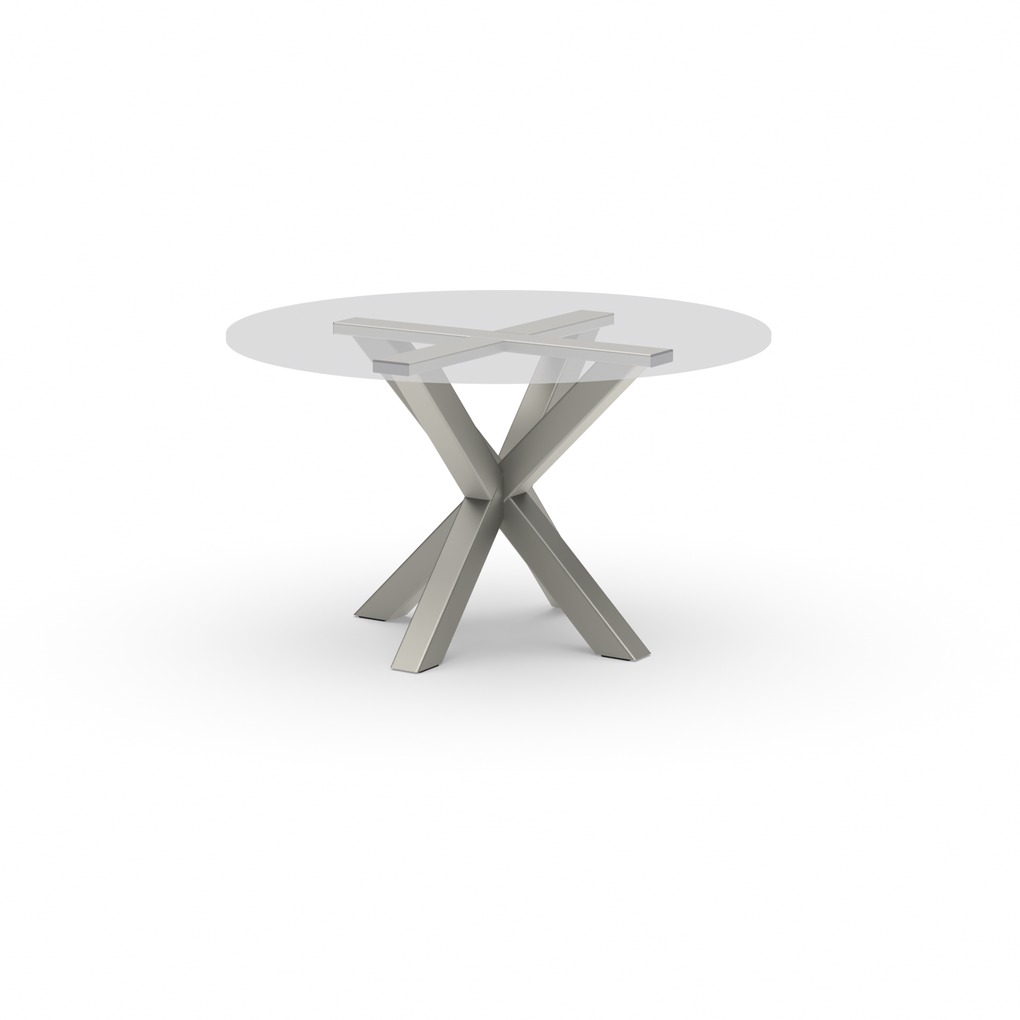
- A table that partly stands outside: ceramic with a stainless steel base.
If you hesitate between two materials, the position of the table usually settles it. If the table stands in the sun or partly outdoors, ceramic is the one that remains. A comparison of all shapes and materials is given in the dining tables overview.
A round table for indoors and outdoors
Only ceramic is suited to outdoor use. The top is UV resistant and does not change colour under sunlight, so a ceramic table can stay on a terrace or in a veranda. Oak and walnut belong indoors, because changing weather and moisture attack the timber.
The base plays its part in that decision. Brushed stainless steel 304 is corrosion resistant by nature and therefore the logical choice for outdoor use. That version is covered in more depth at stainless steel table bases.
A veranda sits between the two worlds and is worth thinking through. Rain stays off the top there, but temperature and humidity still swing with the seasons. Ceramic on a stainless steel base handles that swing without any seasonal routine.
Configuring your round table: base, configurator and showroom
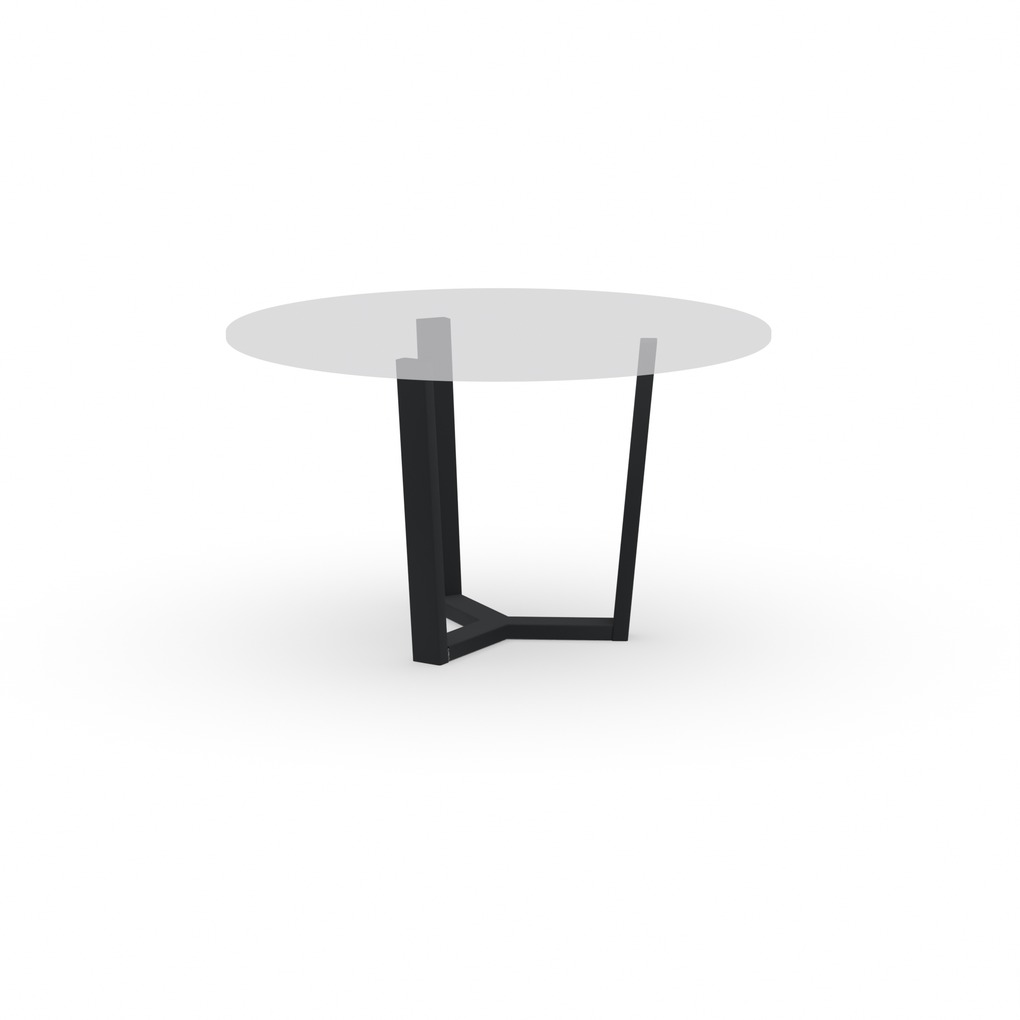
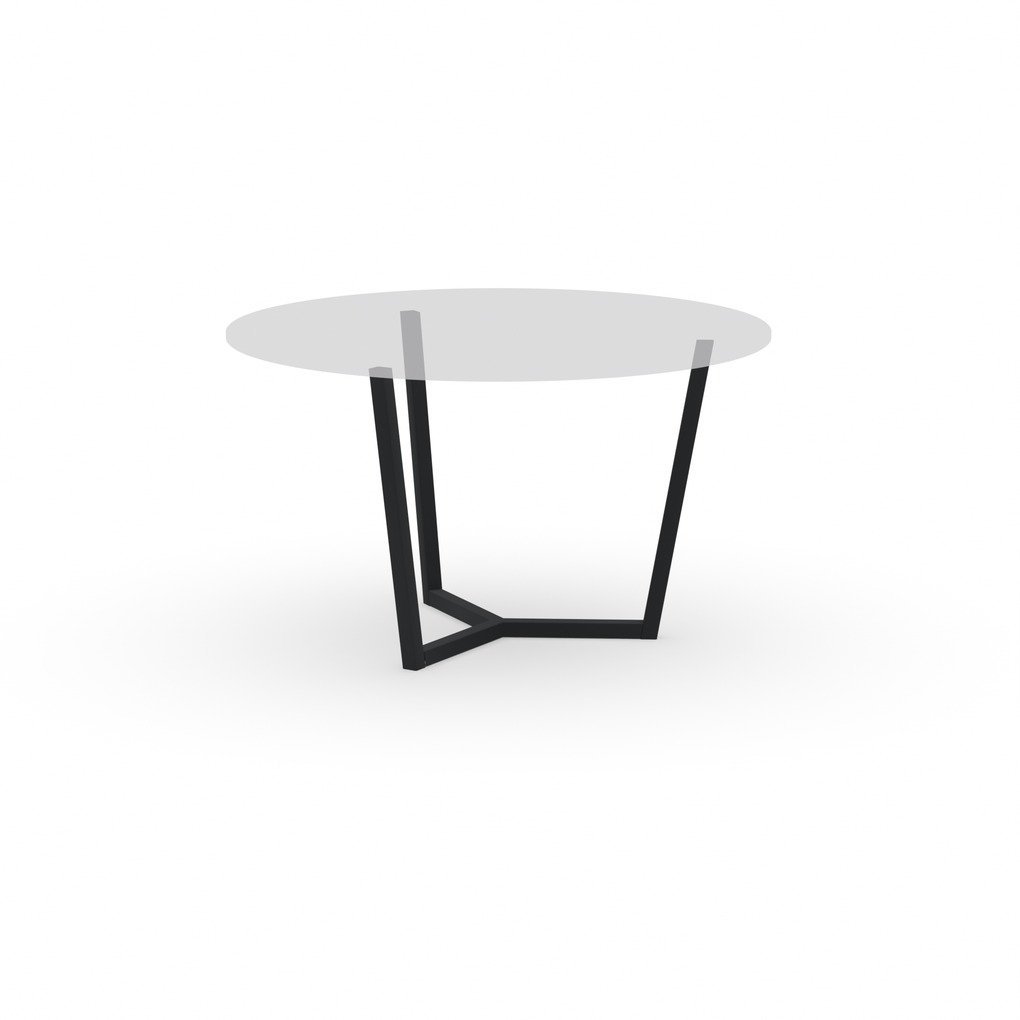
After the material and the diameter you choose the base. There are two versions: powder coated steel in any colour you want, or brushed stainless steel 304. That is an aesthetic choice, not a difference in quality.
The steel base is given a fine texture powder coating and is welded in our own workshop in Maasbree, Netherlands. The coating can be damaged by heavy impact, which does not apply to stainless steel. On stainless steel fingerprints are visible, although they are simple to remove.
The order in which you choose keeps the overview clear.
- Material of the top: ceramic, solid oak or walnut.
- Diameter, based on the number of people and the free clearance.
- Colour of the top: 29 ceramic colours or 19 stain colours.
- Base: powder coated steel in the colour you want, or brushed stainless steel 304.
All possibilities are set side by side at table bases, with more depth per version at steel table bases. In the 3D configurator you put the table together yourself. With every choice you see the price move along, so you can weigh diameter, material and base against each other.
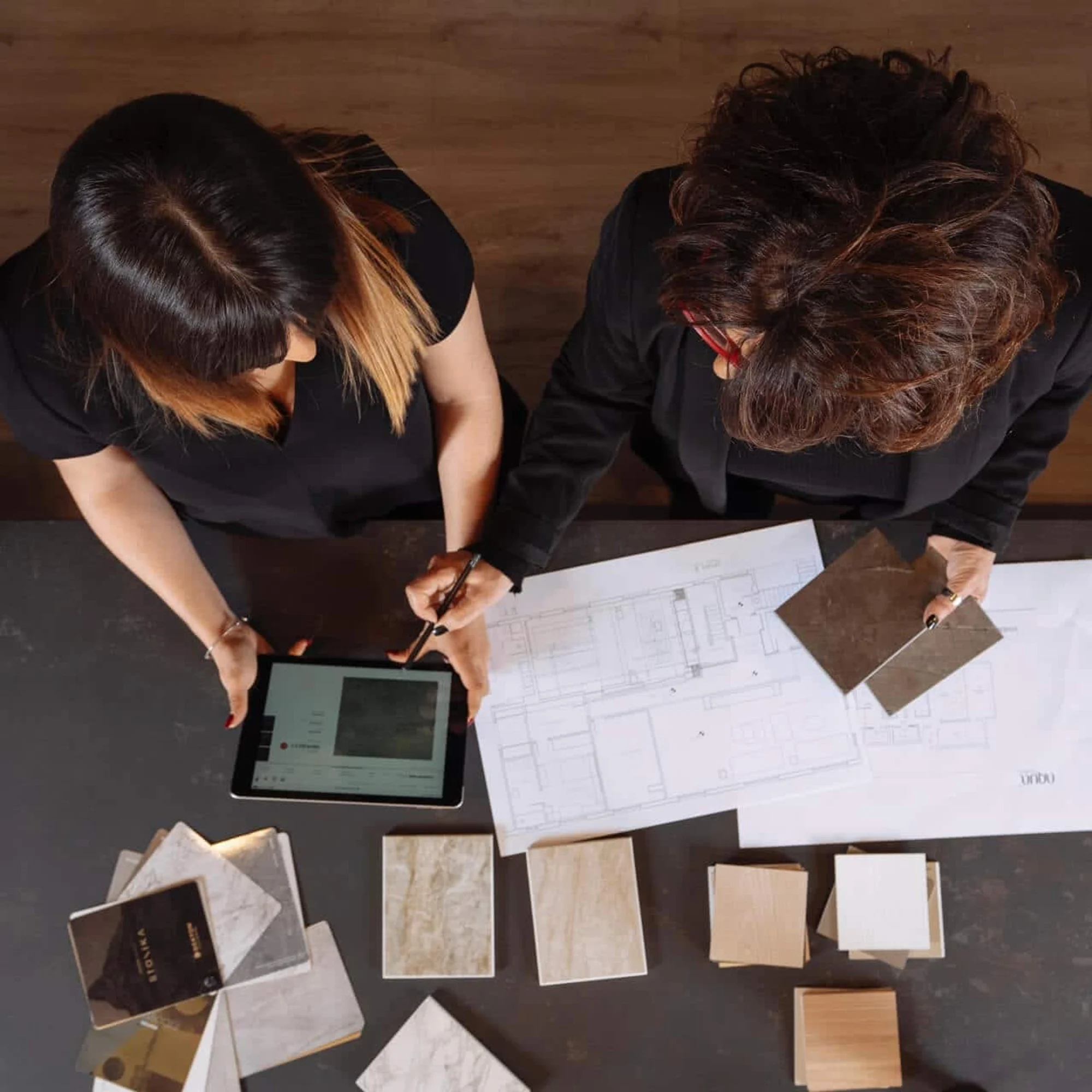
If you want to see the colour at home first, order material samples from €2.50 per sample. That amount is refunded on return of the samples. This way you judge a stain colour or ceramic decor against your own floor and daylight.
Maintenance per material
All three materials ask little of you. A damp cloth is enough for daily use, whichever top you choose. The differences sit in the exceptions.
Ceramic takes heat and aggressive stains without any effect. On oak and walnut you avoid abrasive cleaners, so the 2K lacquer stays intact. On walnut you limit prolonged direct sunlight on the same part of the top, for example with a window covering or by turning the table a quarter turn now and then.
- Ceramic: damp cloth, heat and stains ask for no extra care.
- Oak: damp cloth without abrasive cleaner, do not let moisture stand.
- Walnut: as oak, plus limiting prolonged direct sunlight.
- Bases: fingerprints on stainless steel are simple to remove.
After years of use a wooden top can be sanded and finished again, which makes scratches and rings disappear. The full instructions per material are given on the maintenance page. Construction and finish carry a 2 year guarantee.
Advice, samples and the showroom in Maasbree
A round table is best judged in real life. In the showroom in Maasbree the workshop stands next to the display, so you can see and feel the difference between ceramic, oak and walnut in the same room. The difference between a powder coated steel base and a stainless steel one is then clear in two steps.
We deliver throughout the Netherlands, Belgium and North Rhine-Westphalia (Germany). We offer free delivery on orders above €2500 within the Netherlands and Belgium. The table is made to measure in our own workshop in Maasbree, accurate to the millimetre.
Bring the following with you to a visit or to an advice conversation.
- The dimensions of the room, including the shortest clear wall distance.
- A photo of your floor and of the colours already present in the room.
- The number of people who sit at the table daily.
- The chairs you already have or have in mind.
If you want to read further, start with the advantages of a round dining table or with the step by step guide in choosing a dining table made to measure. If you are thinking about the rest of the living room as well, look at the coffee tables in the same materials. That keeps the materials in your home aligned with each other.
Read moreRead less
Last updated: September 3, 2026