Oval dining tables
Complete your dining area.
Choose chairs for your tableFilters0
38 products


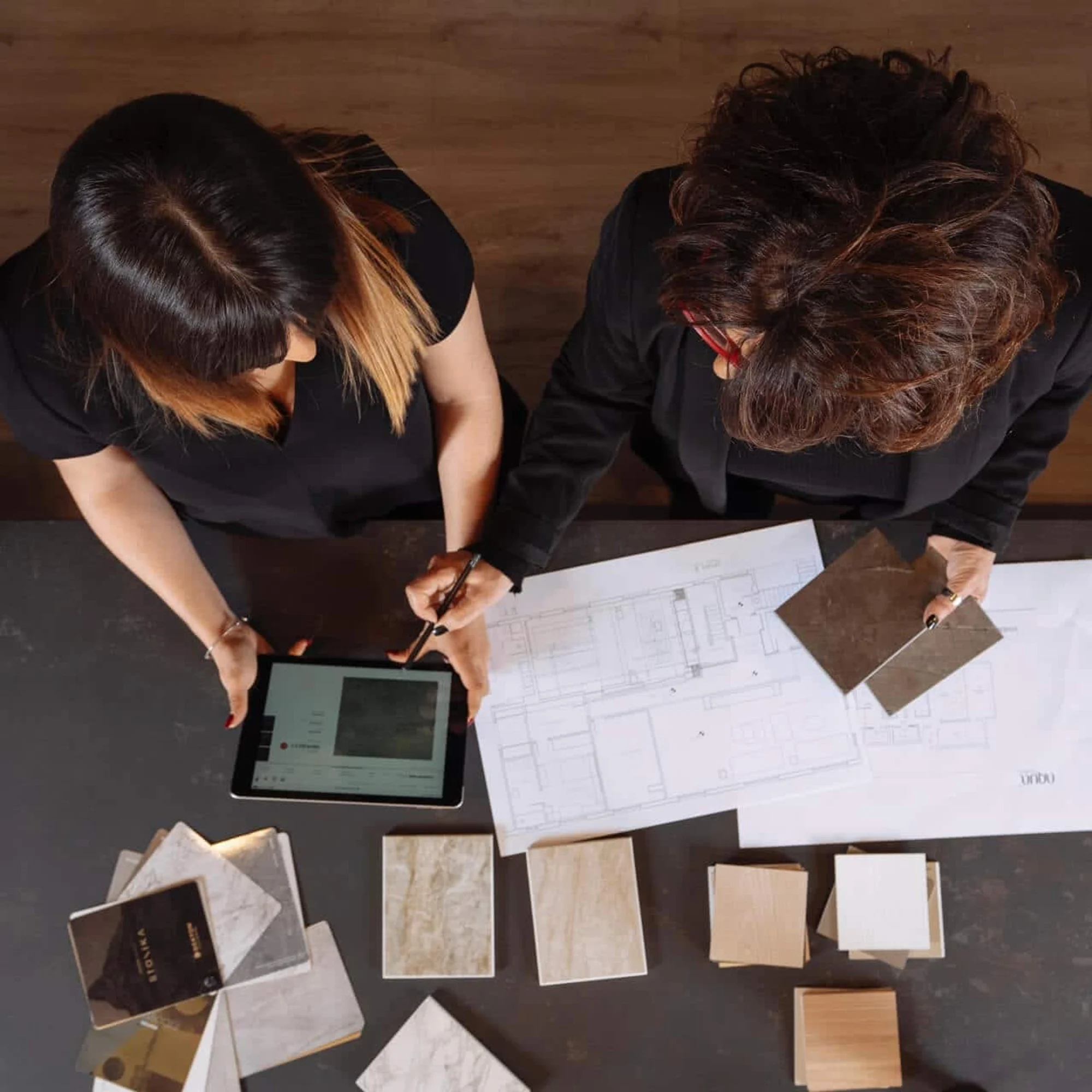
colour samples, €2.50 each
Not sure about the material?
Order colour samples and compare the materials at home, in your own light and interior.
Order colour samples


No products match this combination
Adjust or remove a filter to see results again.

Weighing up an oval dining table against a rectangular or a round top? The oval shape couples the seating capacity of a rectangle to the soft line of a round table, without sharp corners in the walking route. This page sets out when oval is the right choice, which material suits it and which size fits the number of people you seat.
Quick decision guide for three situations. If a walking route runs past the table, or the table stands in a narrow dining room, an oval top is more pleasant to live with than a rectangular one. Looking for the highest number of seats on the smallest floor area, look at all made-to-measure dining tables; if you eat with six people or fewer, round dining tables are often the better solution.
Oval, rectangular, round or Danish oval: which shape suits your dining room?
The shape determines how the table lies in the room and how the conversation runs. An oval top has no sharp corners, so you pass it smoothly and nobody knocks into it while taking a seat. The rounded ends also mean the guests seated at either end can look straight at each other.
A rectangular top remains the most efficient shape in terms of capacity. Over the same length a rectangle offers slightly more usable table edge than an oval, because the corners are used in full. If you are looking above all for maximum capacity for large gatherings, browse the complete range of dining tables.
A round top wins up to and including six people. Everyone then sits at an equal distance from everyone else and there is no head of the table, which keeps the conversation balanced. Above that number the diameter becomes too large to stay comfortable; the trade-offs are set out in our blog on the advantages of a round dining table.
A Danish oval top is the crisper cousin of the oval. It has straight long sides with rounded ends, so chairs along the side line up more neatly and the silhouette reads as more modern. If you want that calmer line, compare it with the Danish oval dining tables; if you want a continuous curve over the full length, the classic oval is your shape.
In short, the choice of shape comes down to three questions. How many people have to sit at the table as standard, how much walking space does the room have left over, and which line suits your interior. Answer those three and the shape usually falls out by itself: oval for six to ten people with limited circulation, rectangular for pure capacity, round for intimate conversation and Danish oval for a crisp interior.
Oval ceramic dining table: the most carefree top
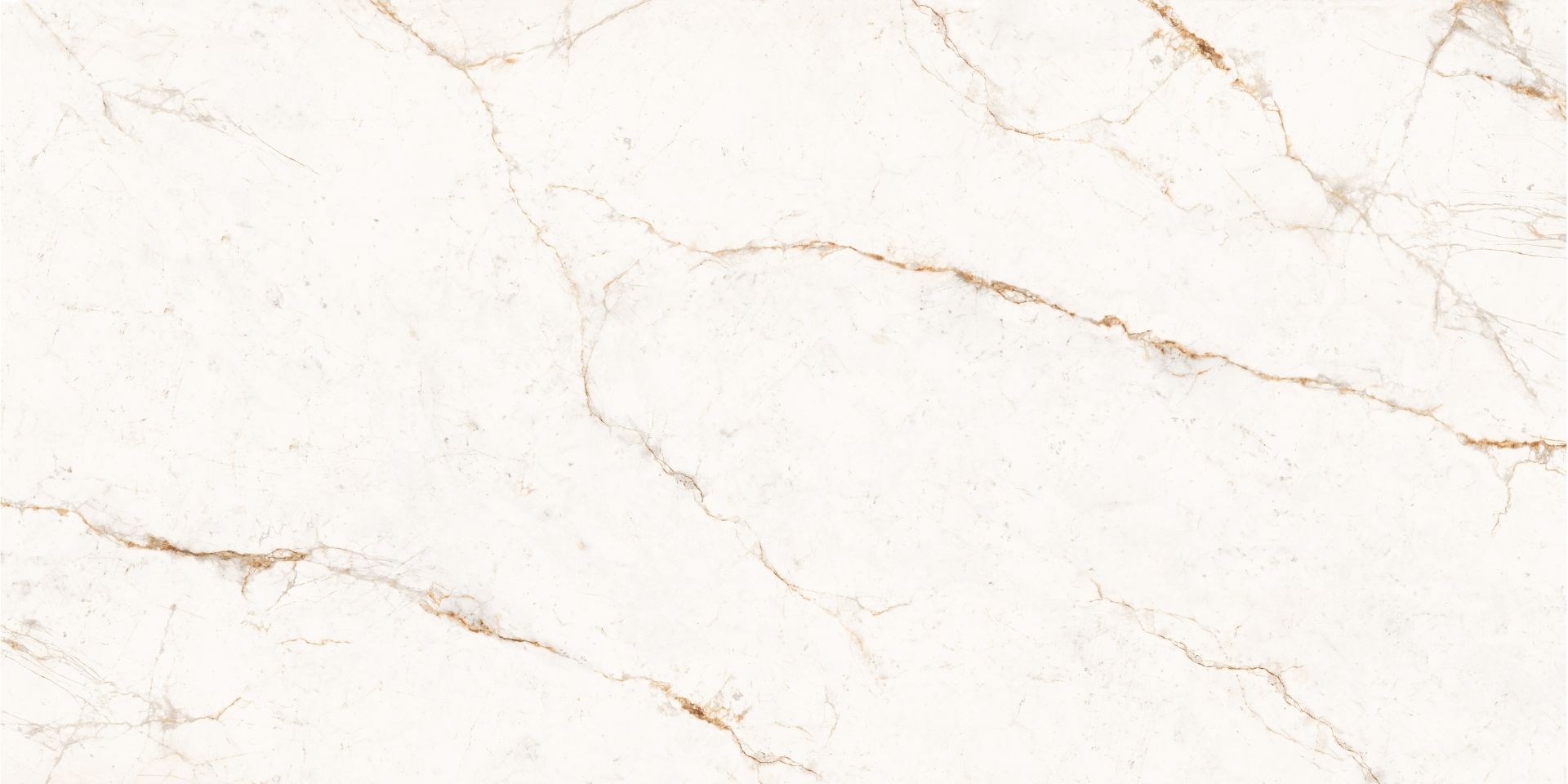
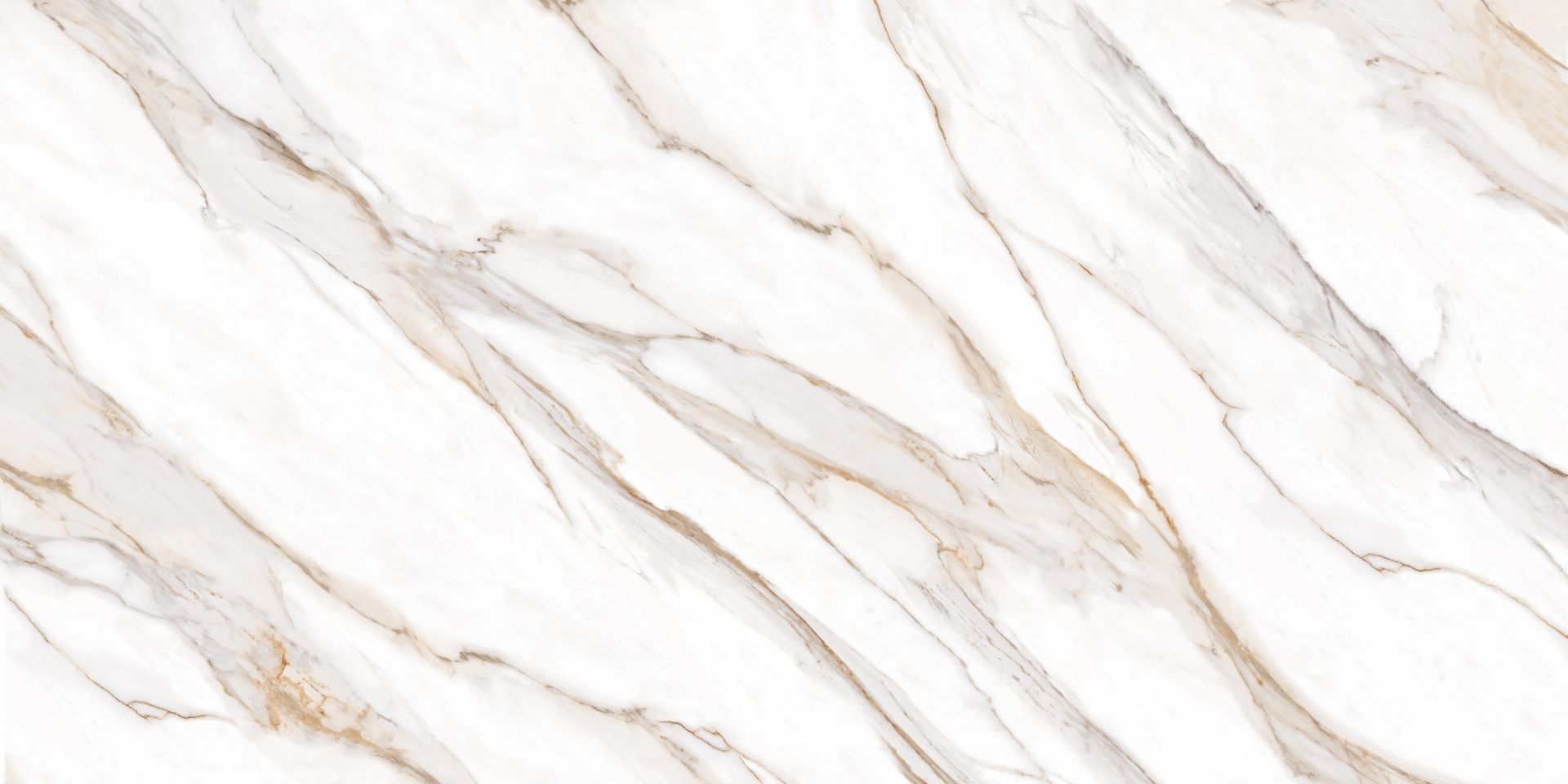
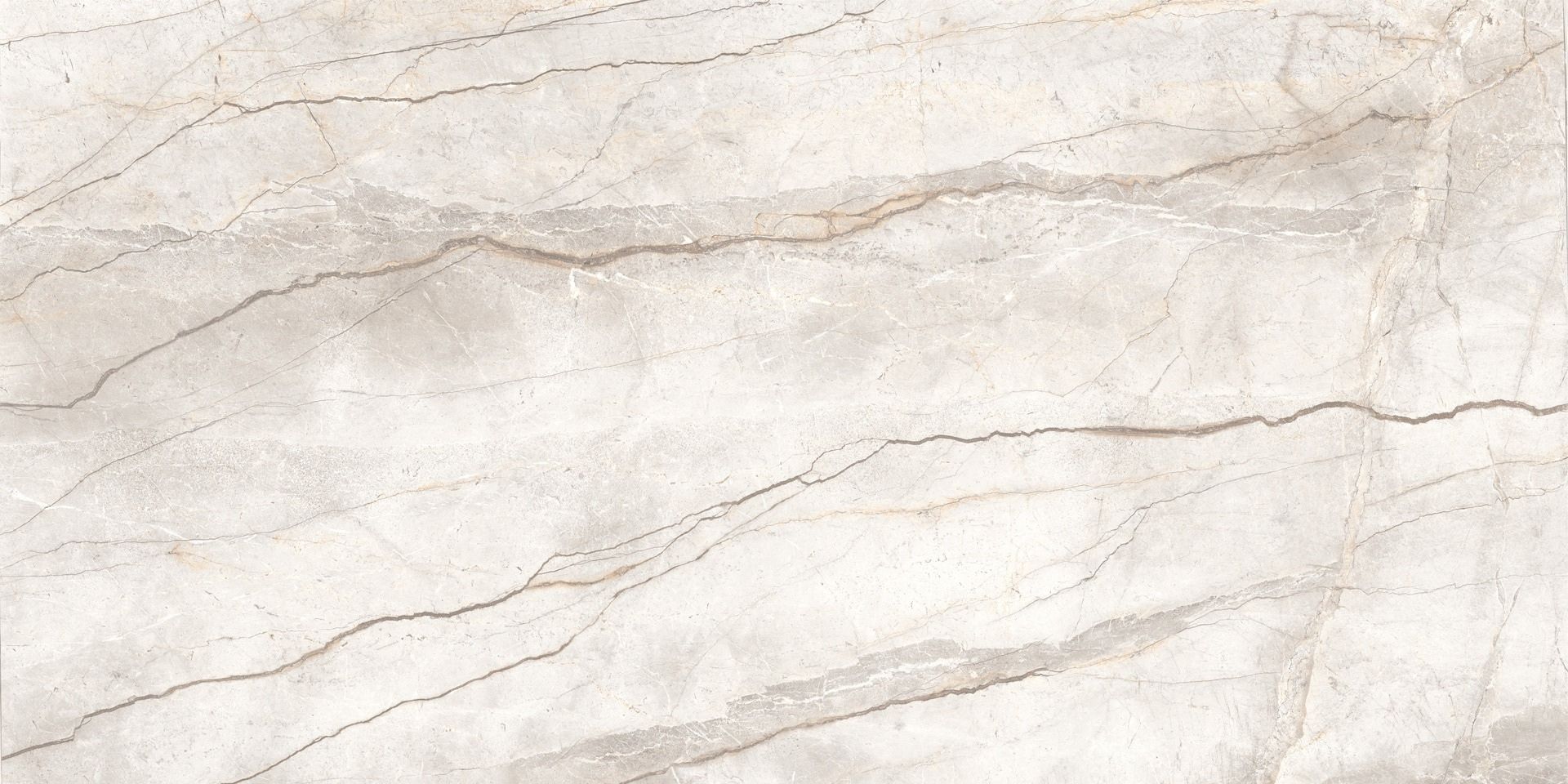
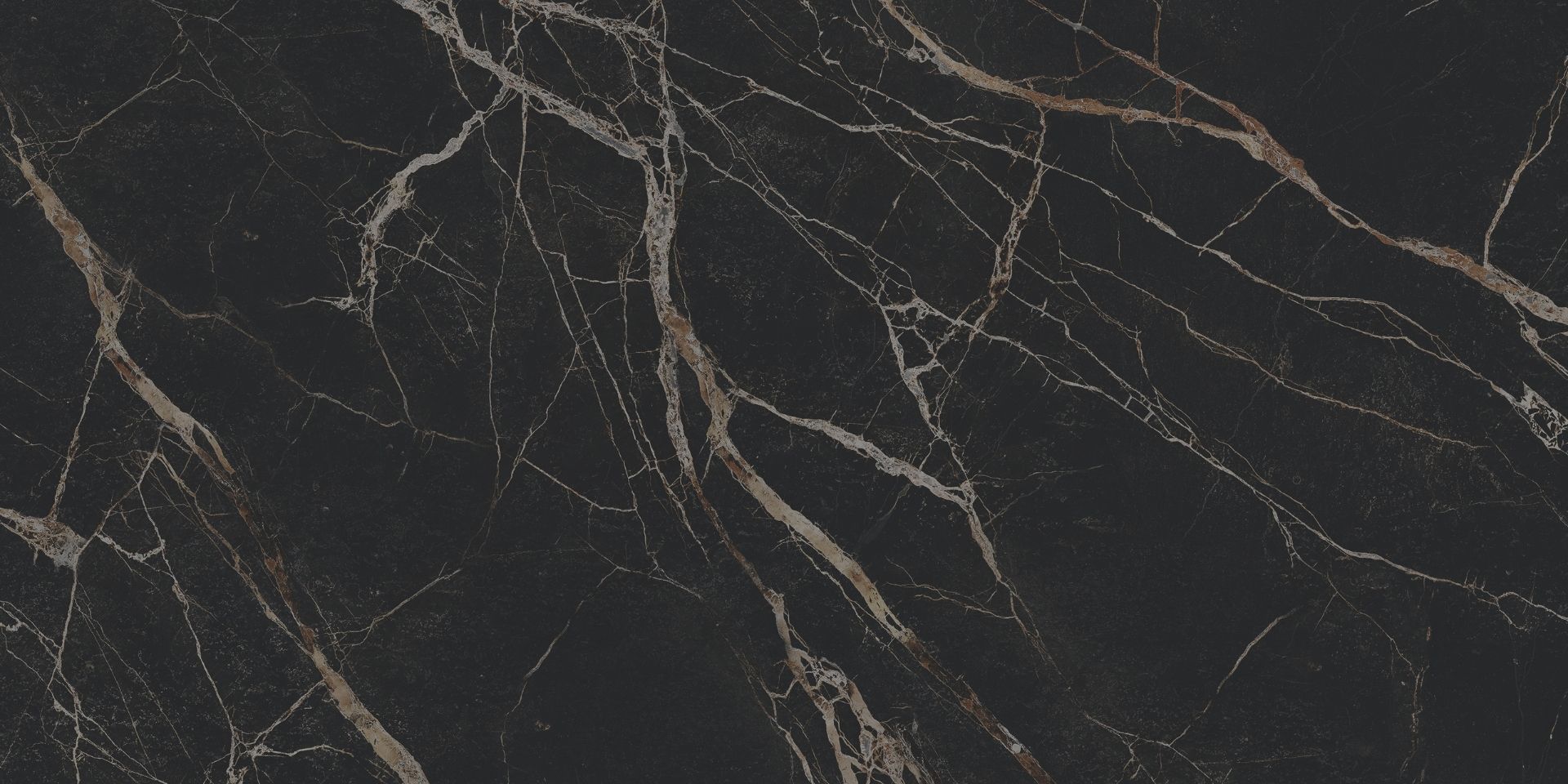
Ceramic is the material for anyone who uses the table intensively every day. The top is heat, scratch and stain resistant and has a very low porosity, so red wine, oil and coffee get no chance to soak in. The material is also UV resistant and therefore suitable for indoor and outdoor use.
An oval ceramic dining table goes up to 3200 by 1600 mm with us, the largest oval size in the range. The top is 12 mm thick and available in 29 colours, from concrete looks to pronounced marble decors. To be honest about the drawback: ceramic is heavy and the edge is sensitive to hard point loads, so always have the top placed by two people.
You will find the full choice of colours at the oval ceramic dining tables and in the wider range of ceramic dining tables.
Oval oak dining table: warmth and repairability
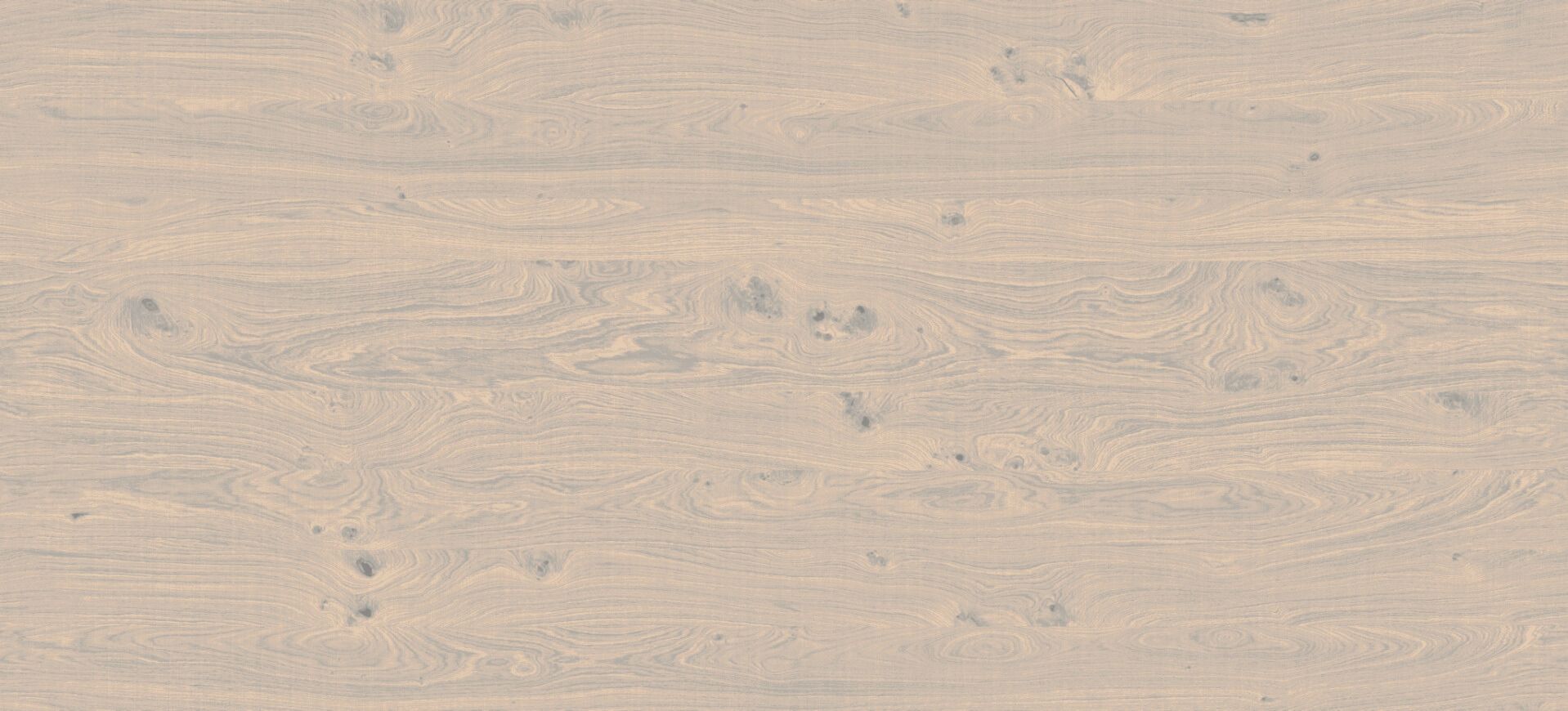
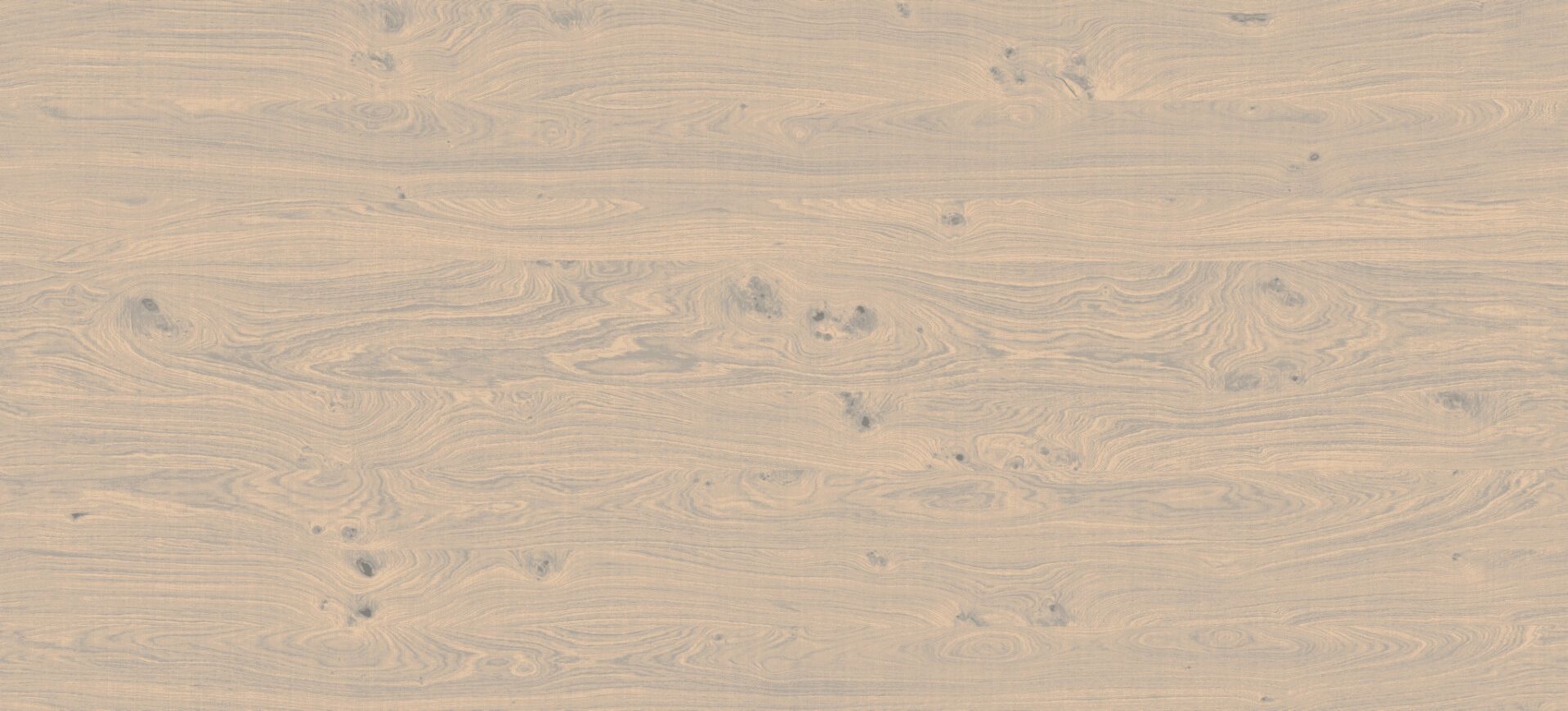
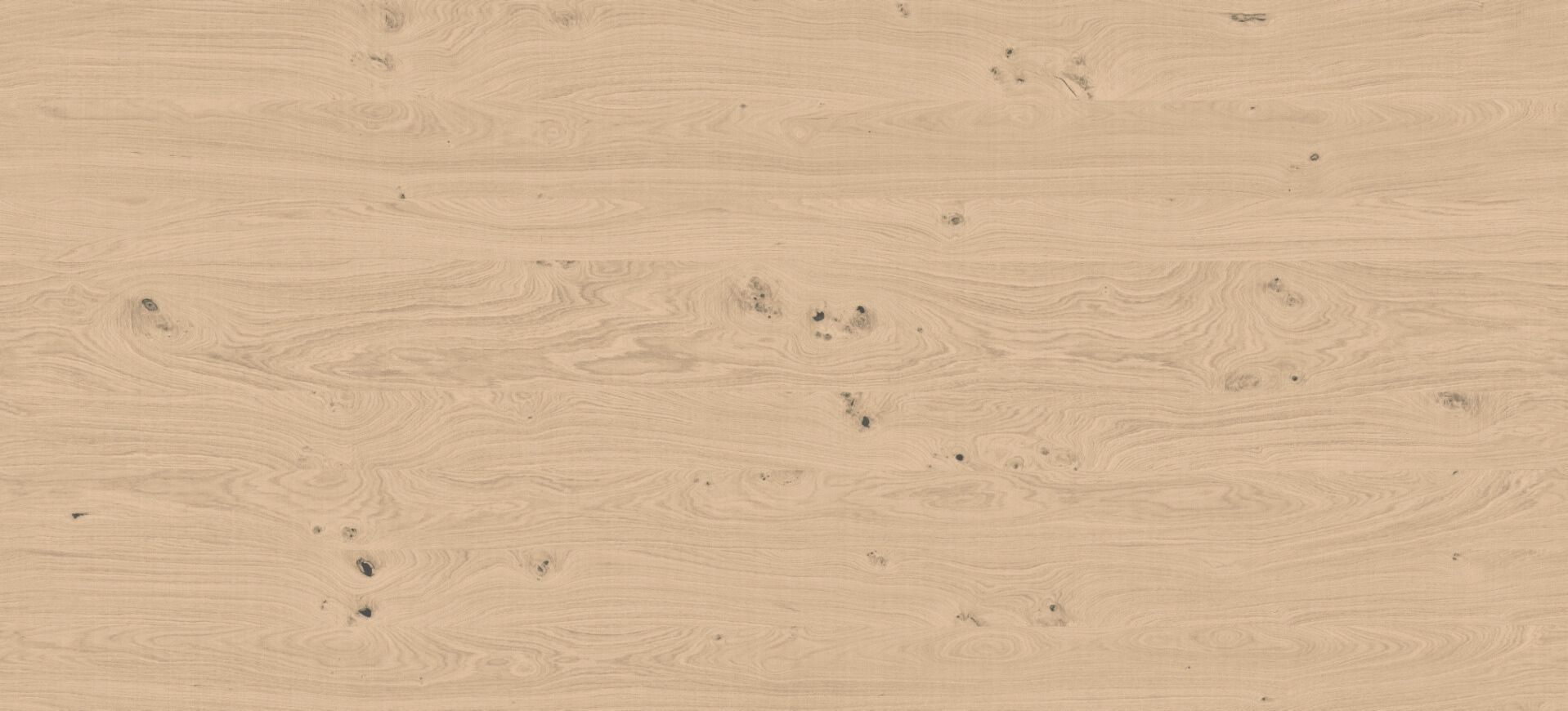
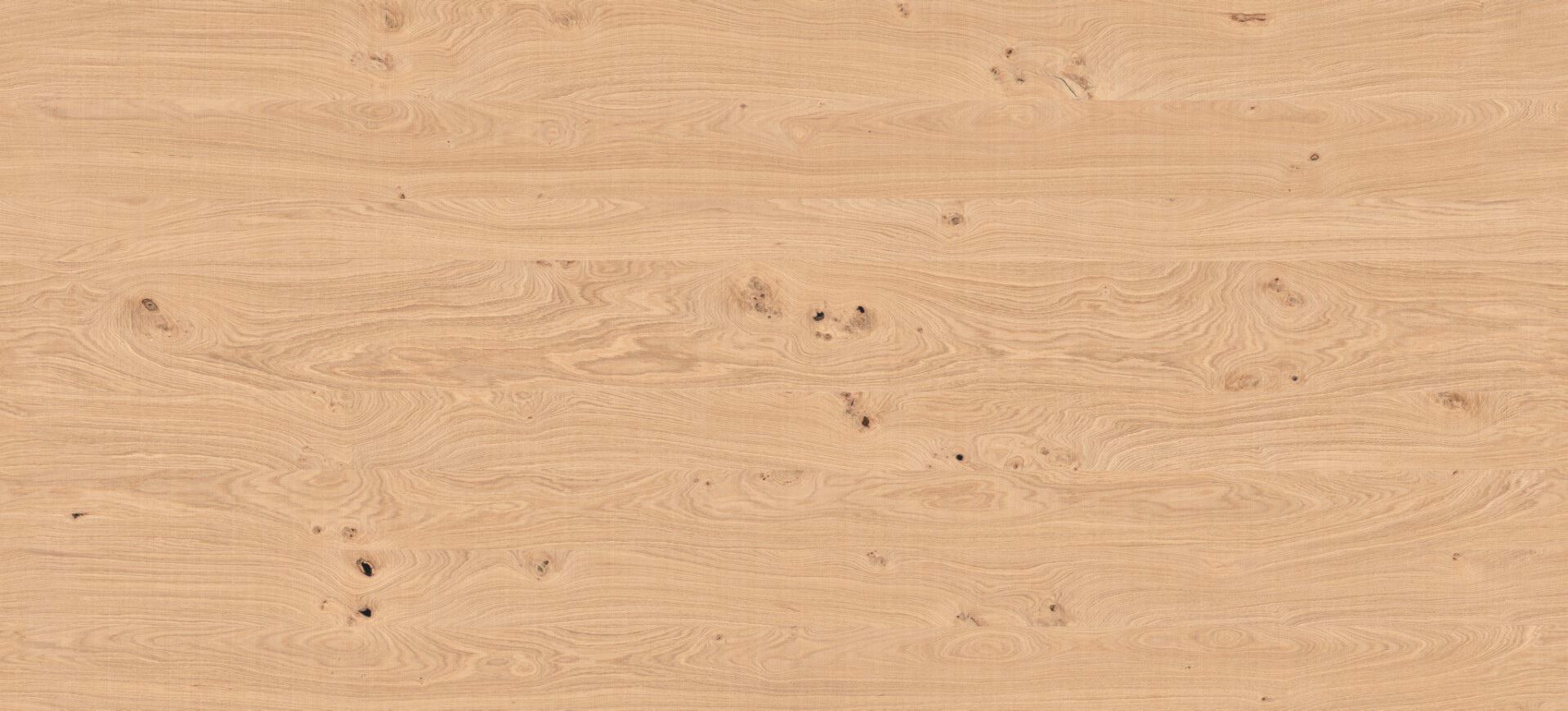
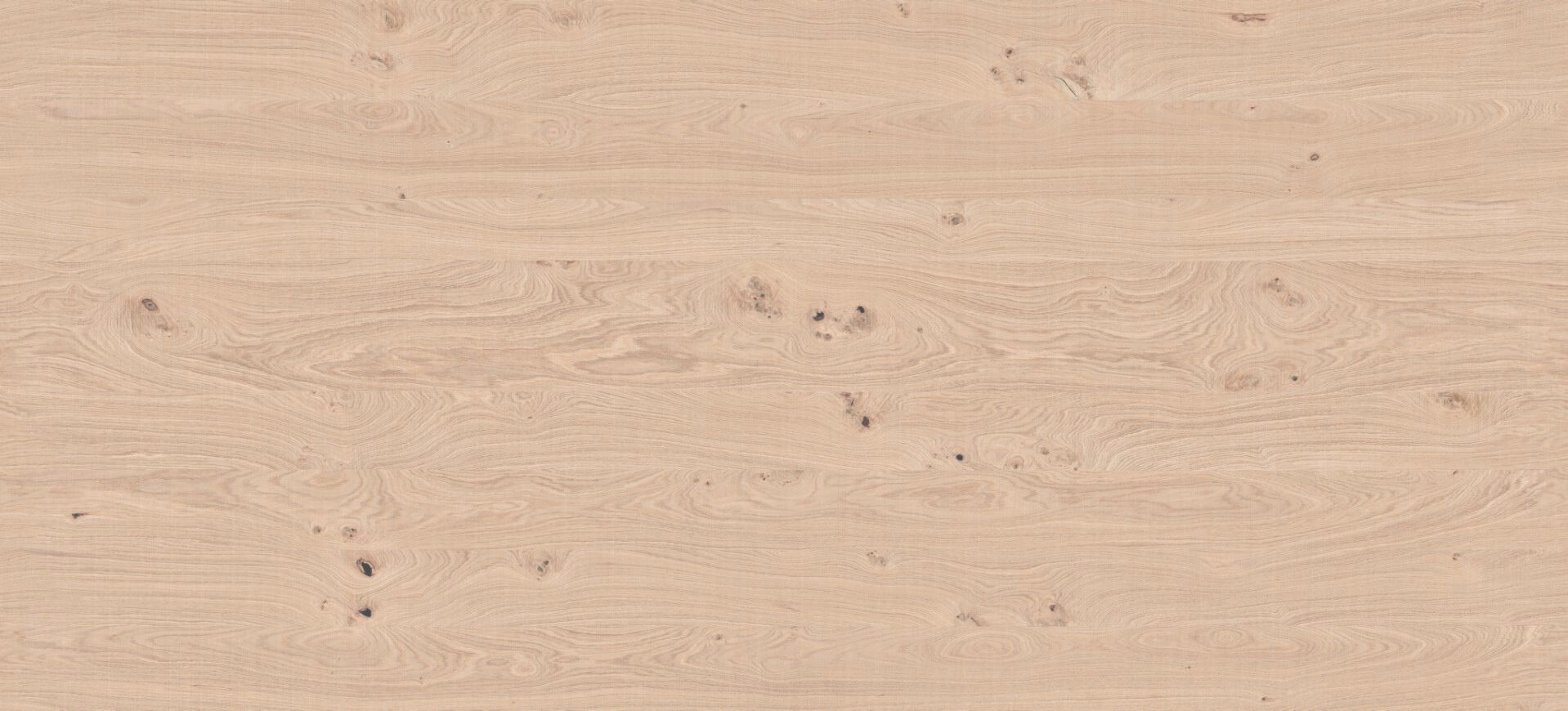
Solid European oak gives an oval table immediate warmth and grain. The wood has an open grain and honey to golden brown tones that grow deeper and warmer over the years. A scratch or a ring mark is no disaster either, because an oak top can be sanded back.
The top is 40 mm thick and stained in 19 colours, finished with two coats of clear matt 2K lacquer. An oval oak dining table is available up to 3000 by 1300 mm. Oak is intended for indoor use and not for outdoors; cleaning is done with a damp cloth.
See the possibilities at the oval oak dining tables, the complete overview of oak dining tables or all wooden dining tables.
Oval walnut dining table: the most exclusive timber
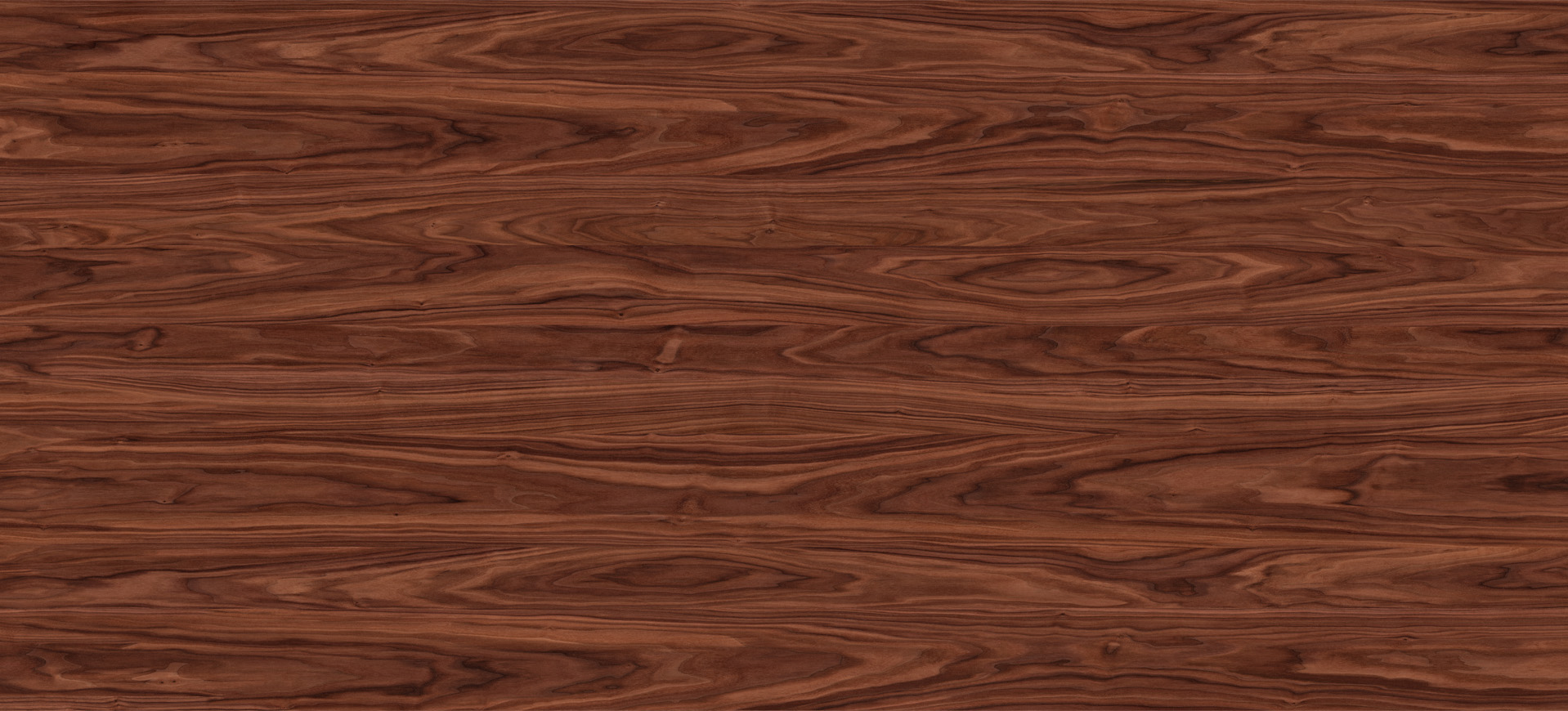
Walnut is the most exclusive timber in our range. The colour is a deep chocolate brown with purple undertones, a figure that comes into its own particularly well in an oval top because the grain follows the curve. Walnut is lighter in weight than oak and still dimensionally stable.
An oval walnut top is available up to 2600 by 1300 mm and is 40 mm thick just like oak, with the same stain and 2K lacquer finish. Under prolonged direct sunlight walnut can lighten a little; the UV blockers in the lacquer limit that effect. Walnut is an indoor timber as well and not suitable for outdoors.
More about this timber can be found at the walnut dining tables.
Oval granite dining table: natural stone with a pattern of its own
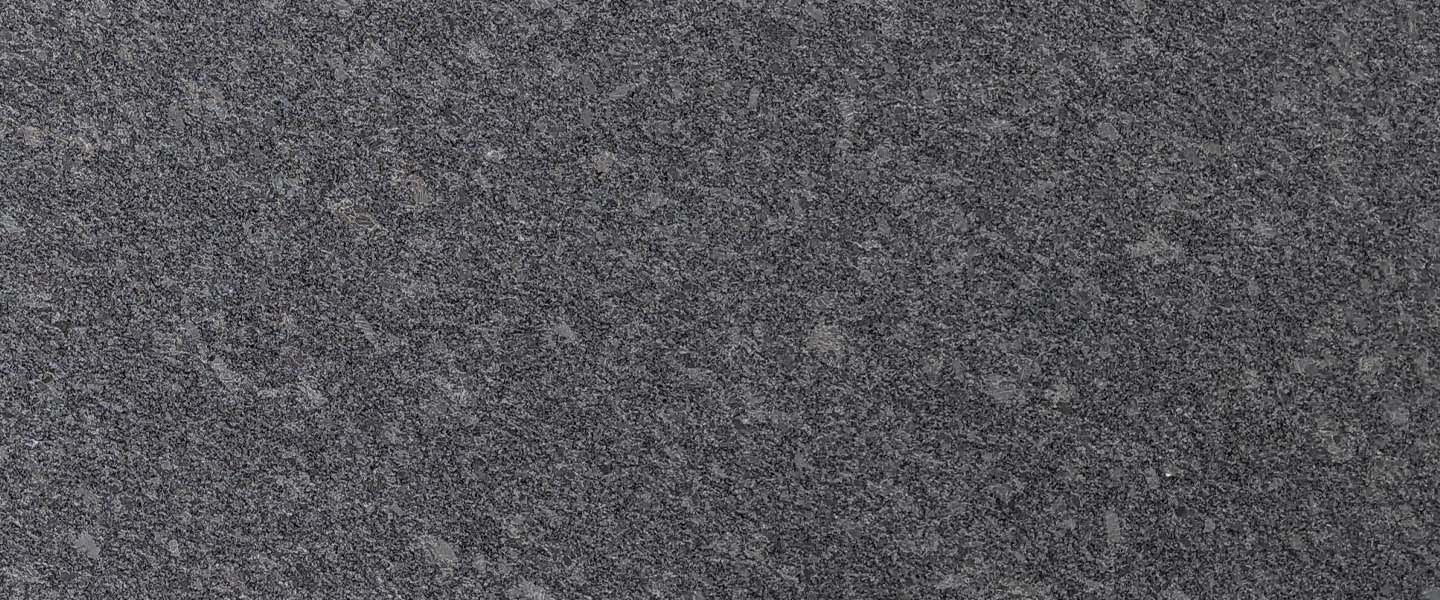
Granite is volcanic natural stone in which every slab carries its own pattern. No two tables are the same, and that pattern gives an oval top a calm, solid presence. You choose between polished for gloss or honed for a matt, skin friendly finish.
An oval granite dining table is available up to 2400 by 1000 mm, which makes it the most compact of the four materials. Granite has to be impregnated once you receive it and then again every two to three years. Its scratch resistance is reasonable and not as high as that of ceramic, and for hot pans we advise trivets.
The material information and the available types can be found at the granite dining tables.
How many people fit around an oval table?
Allow 70 to 75 cm of width per person along each long side. That is the measurement at which two guests sit comfortably next to each other without elbow contact. At the rounded ends, a top from roughly 1000 mm wide will usually take one more person per end.
With that guideline you arrive at the following oval lengths:
- 1600 to 1800 mm: two people per long side plus the ends, six seats in total.
- 2000 mm: the same six seats, but more generously measured per person.
- 2200 to 2600 mm: three people per long side plus the ends, eight seats in total.
- 2900 to 3200 mm: four people per long side plus the ends, ten seats in total.
The ends are where an oval differs most clearly from a rectangle. Because the curve runs on instead of stopping in a corner, a chair at the end can be shifted a little in or out without landing against an edge. That is why we count one extra person per end from about 1000 mm of width and not below it.
The width determines the comfort across the table and the room for dishes in the centre. An oval top of 1000 mm wide is perfectly fine for daily use, while 1200 to 1300 mm gives room for serving dishes without the plates being squeezed. Only in ceramic does the width run on to 1600 mm, which gives an oval table an almost lounge like scale.
Mark the chosen size out on the floor before you order. With masking tape you set out the oval outline and walk around it for a few days, including opening cupboard doors and pulling chairs out. That way you often notice that a top of 2200 mm feels roomier than the floor plan suggests, or that the last 100 mm will not fit after all.
The space around the table is just as decisive as the size of the table itself. Keep at least 80 cm of clear walking space around the table, so that guests can take a seat while someone walks past. Measure the room first and subtract 80 cm on every side; what remains is your maximum top size, and when choosing dining chairs the armrest counts within the 70 to 75 cm per person.
Four materials compared for an oval top
| Feature | Ceramic | Oak | Walnut | Granite |
|---|---|---|---|---|
| Maximum oval size | 3200 × 1600 mm | 3000 × 1300 mm | 2600 × 1300 mm | 2400 × 1000 mm |
| Appearance | 29 colours, from concrete to marble look | Open grain, honey to golden brown | Deep chocolate brown, purple undertone | Every slab its own pattern |
| Top thickness | 12 mm | 40 mm | 40 mm | Determined in consultation |
| Scratch resistance | Very high | Lacquered surface, can be sanded back | Lacquered surface, can be sanded back | Reasonable |
| Hot pans | Heat resistant | Use trivets | Use trivets | Use trivets |
| Usable outdoors | Yes, UV resistant | No, indoors | No, indoors | Ask us for advice |
| Care | Wipe down, no treatment needed | Damp cloth | Damp cloth | Impregnate, repeat every 2 to 3 years |
| Point to note | Heavy, edge sensitive to point loads | Colour deepens over the years | Can discolour in direct sunlight | No acidic cleaners |
The decision advice in a single paragraph. If you are buying for a busy household, young children or a table that also does duty on the terrace, ceramic is the safest choice and moreover the only material that goes to 3200 mm in an oval. If you want warmth, repairability and a top that becomes more beautiful with the years, oak is the logical route and walnut the more exclusive variant of it.
Granite is the choice for anyone who wants natural stone with a figure of its own and accepts the periodic impregnating that comes with it. Bear in mind the smaller maximum oval size of 2400 by 1000 mm. If you are still hesitating between materials, our blog on choosing a made-to-measure dining table will help you further.
Putting your oval dining table together to measure
Every oval table is made to measure down to the millimetre. You are therefore not tied to standard lengths: if 2340 by 1120 mm fits your dining room better, the top is made to that size. The standard table height is 76 cm.
In the 3D table configurator you put the table together yourself. You choose the shape, material, colour, size and base, and with every choice you see the matching price and the result in 3D straight away. That prevents surprises afterwards and makes the difference between materials and sizes immediately clear.
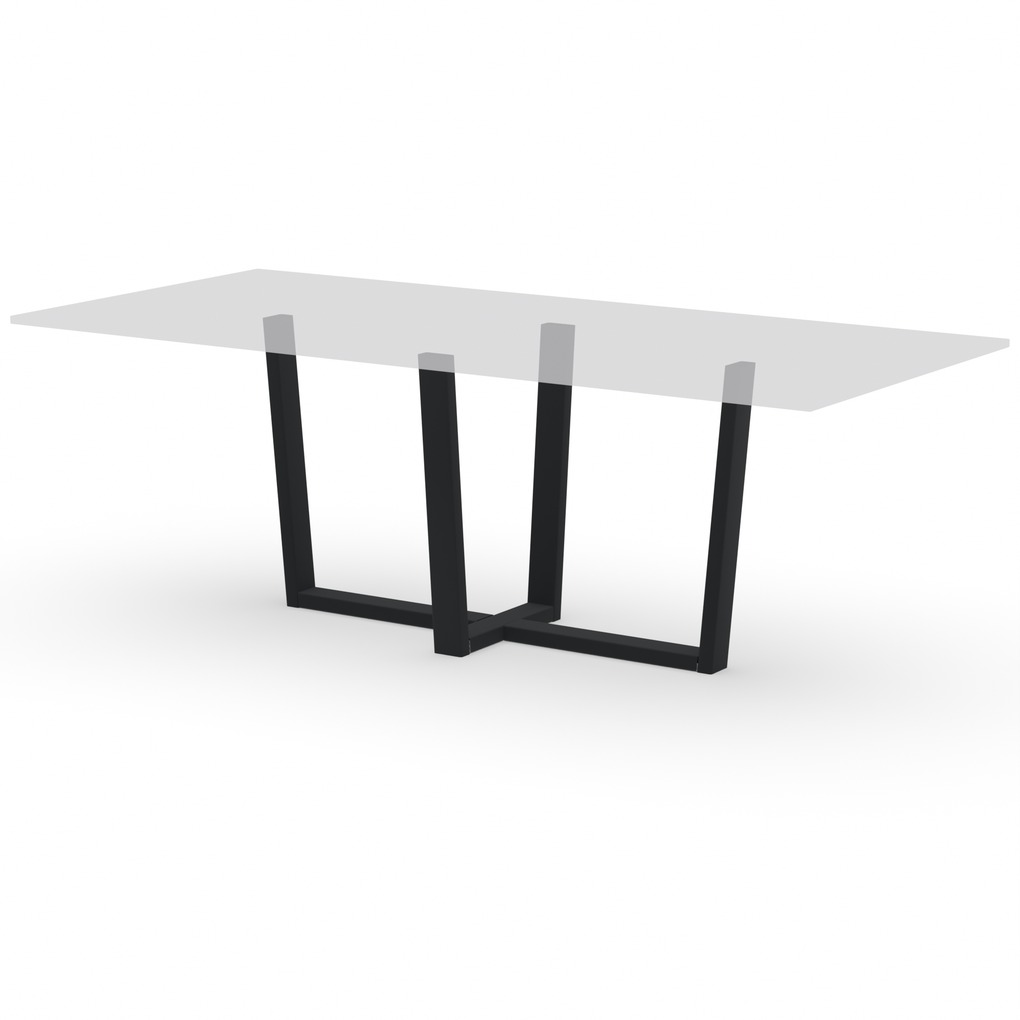
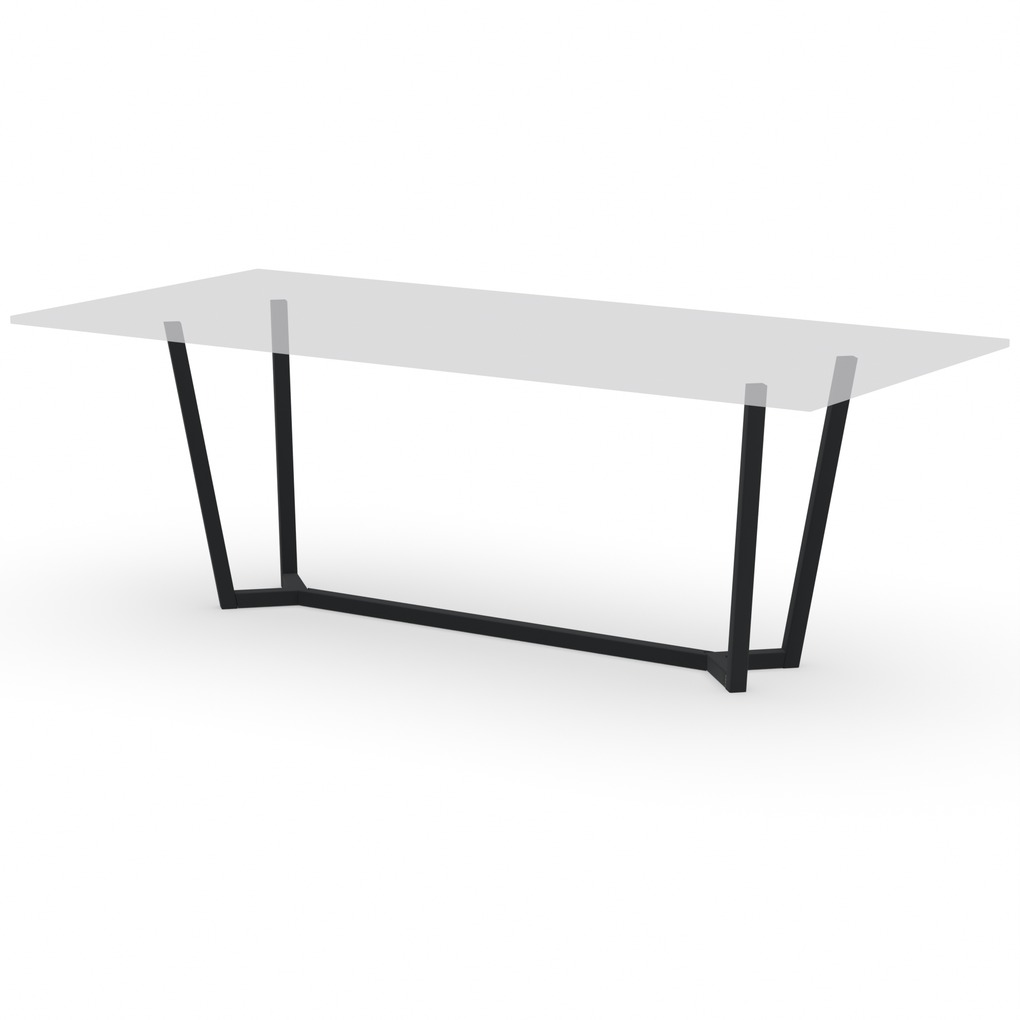
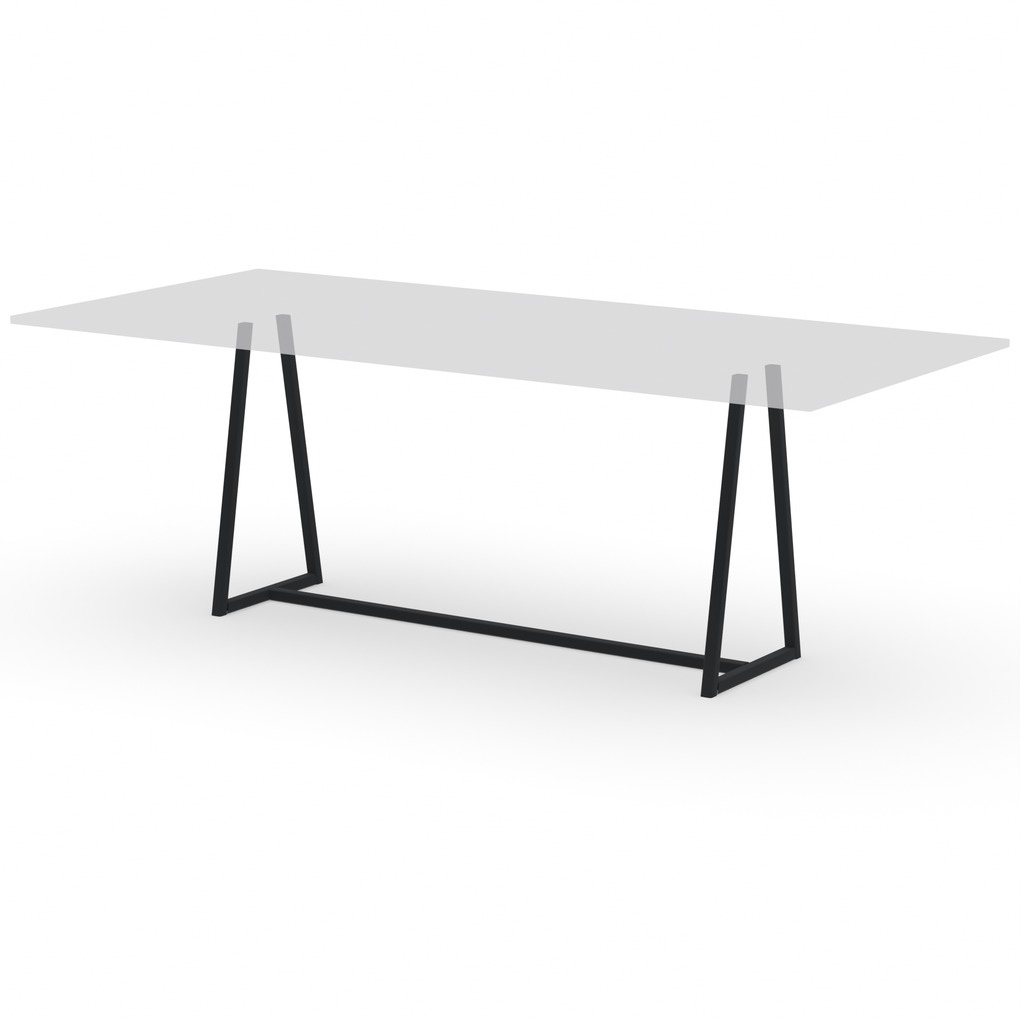
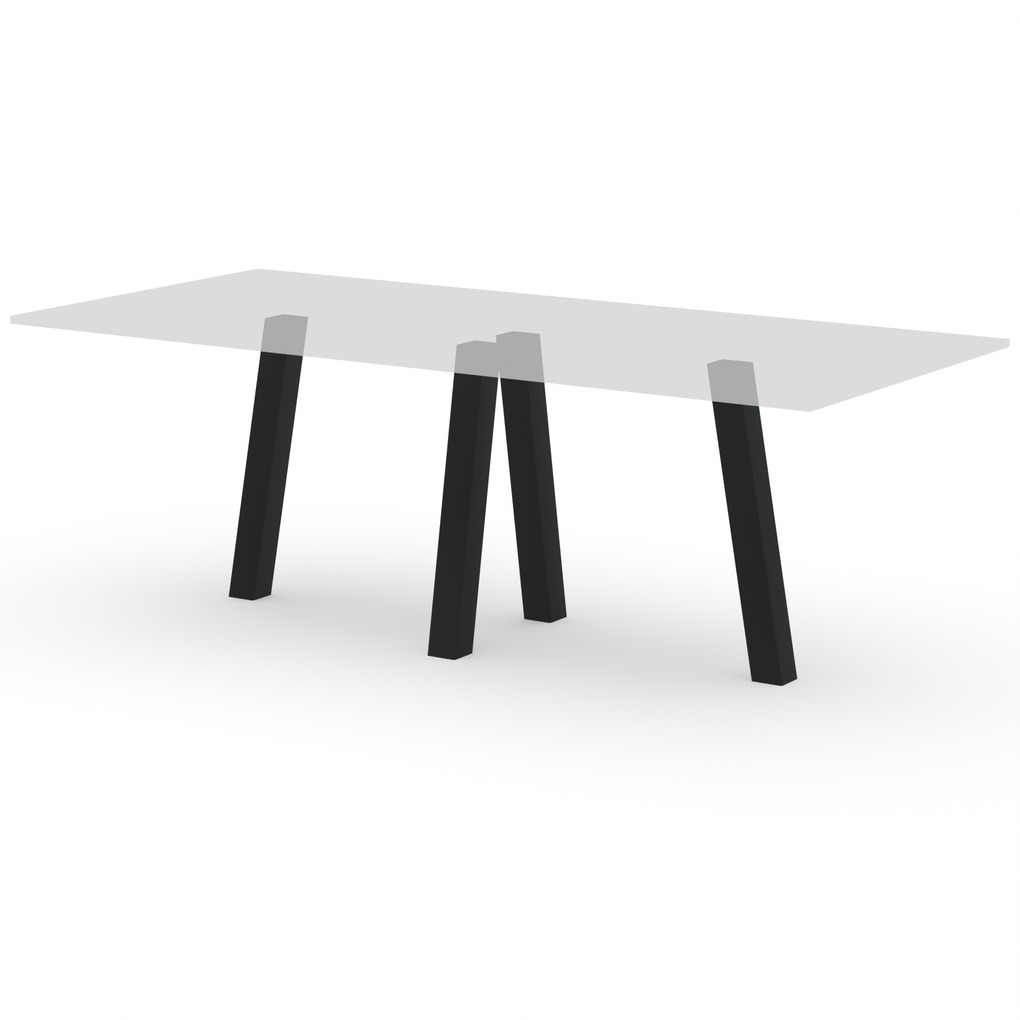
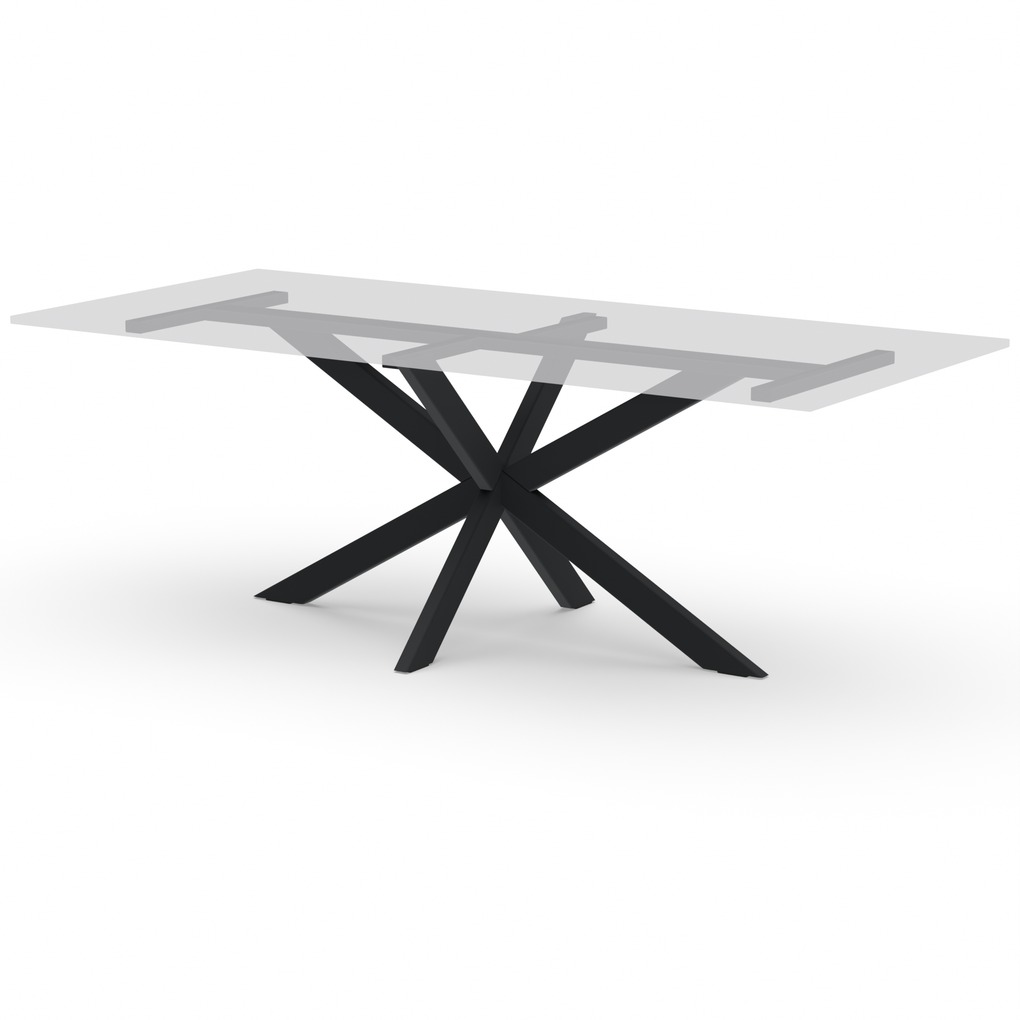
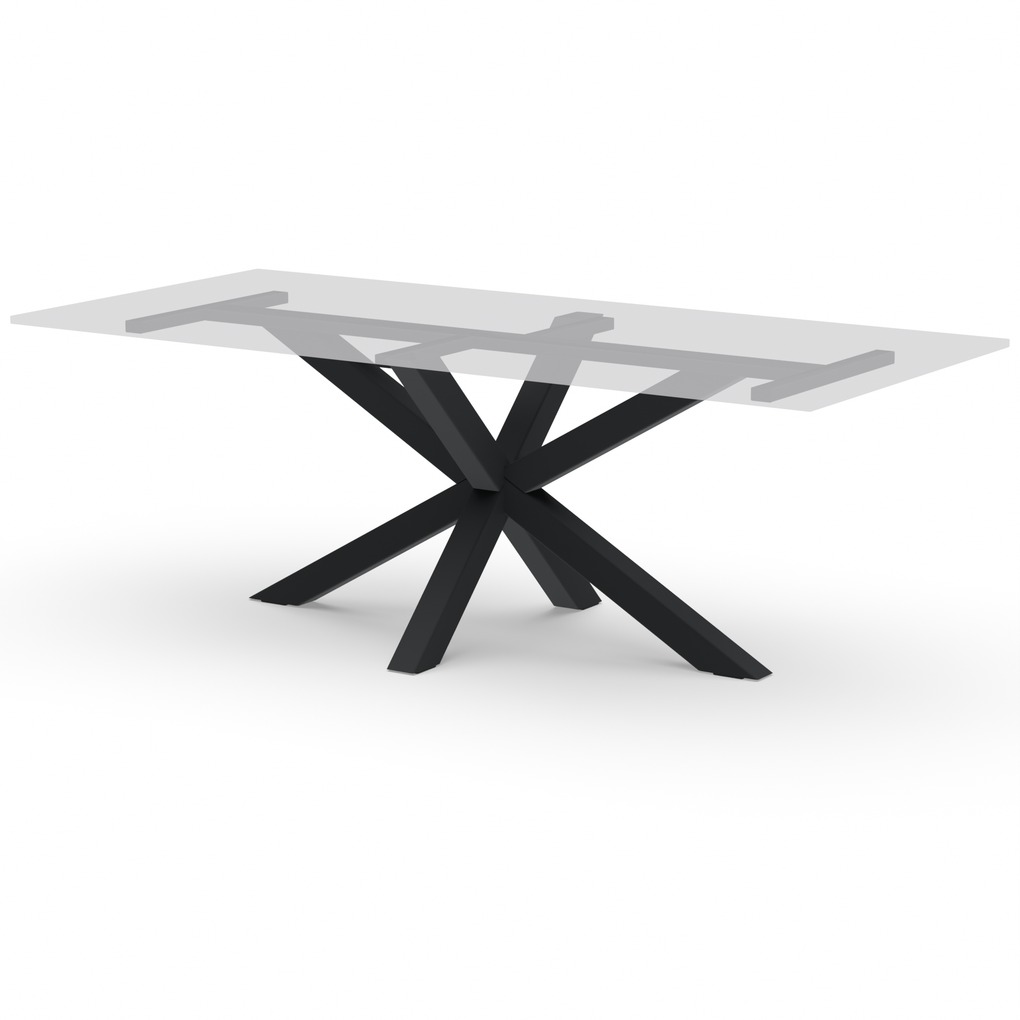
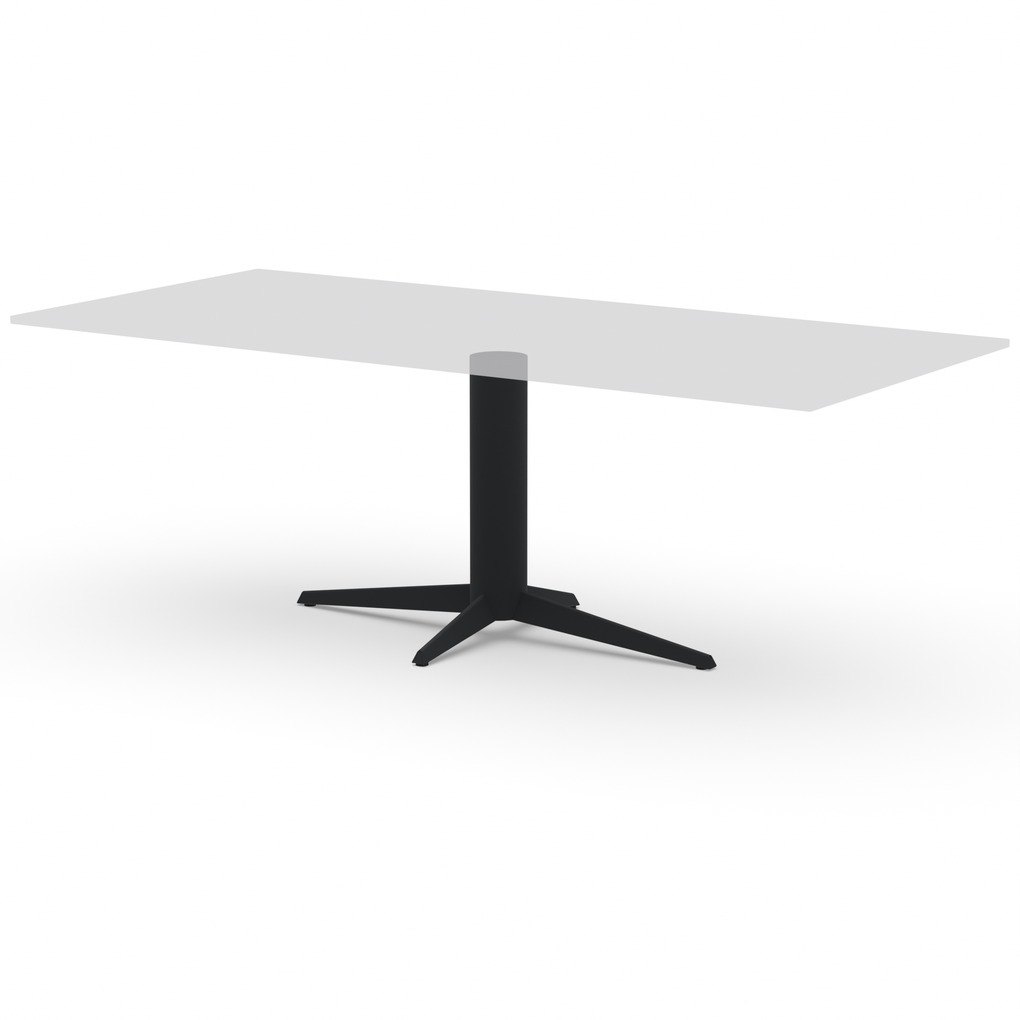
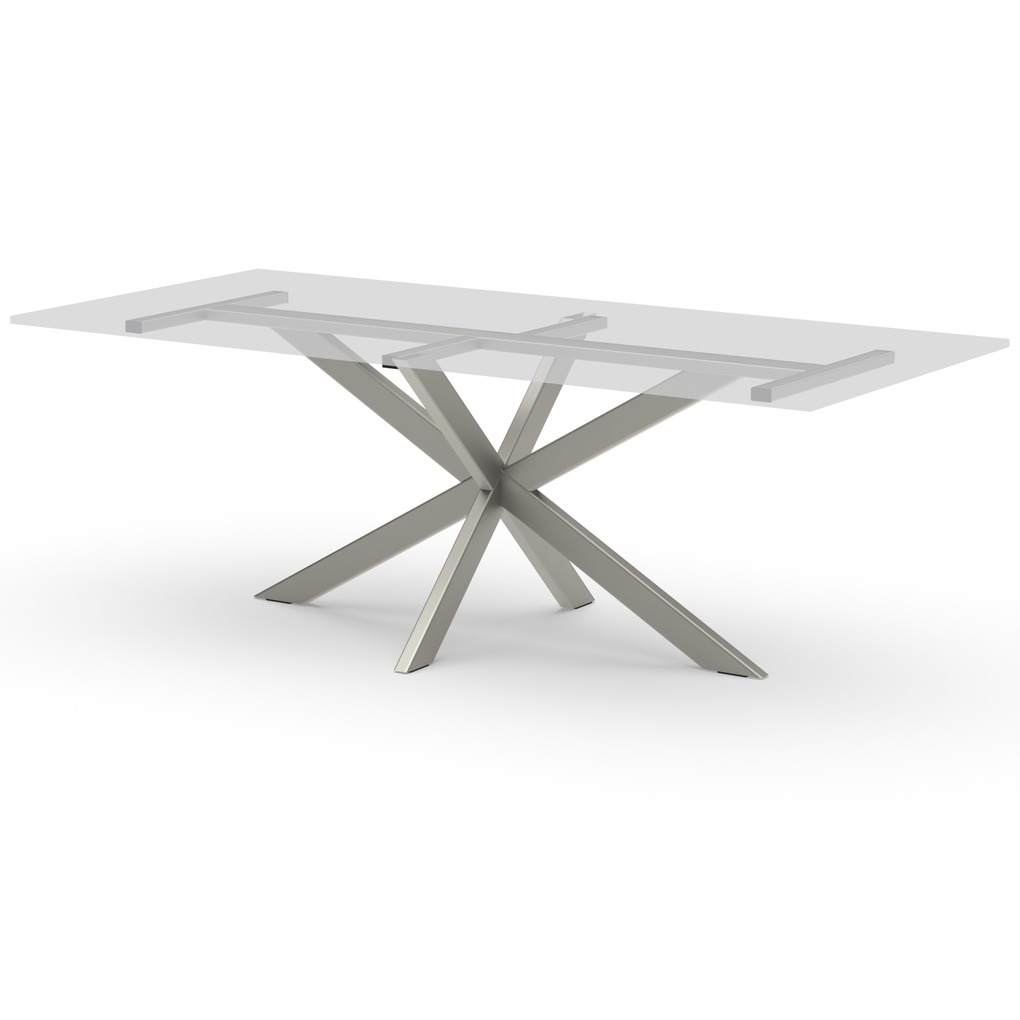
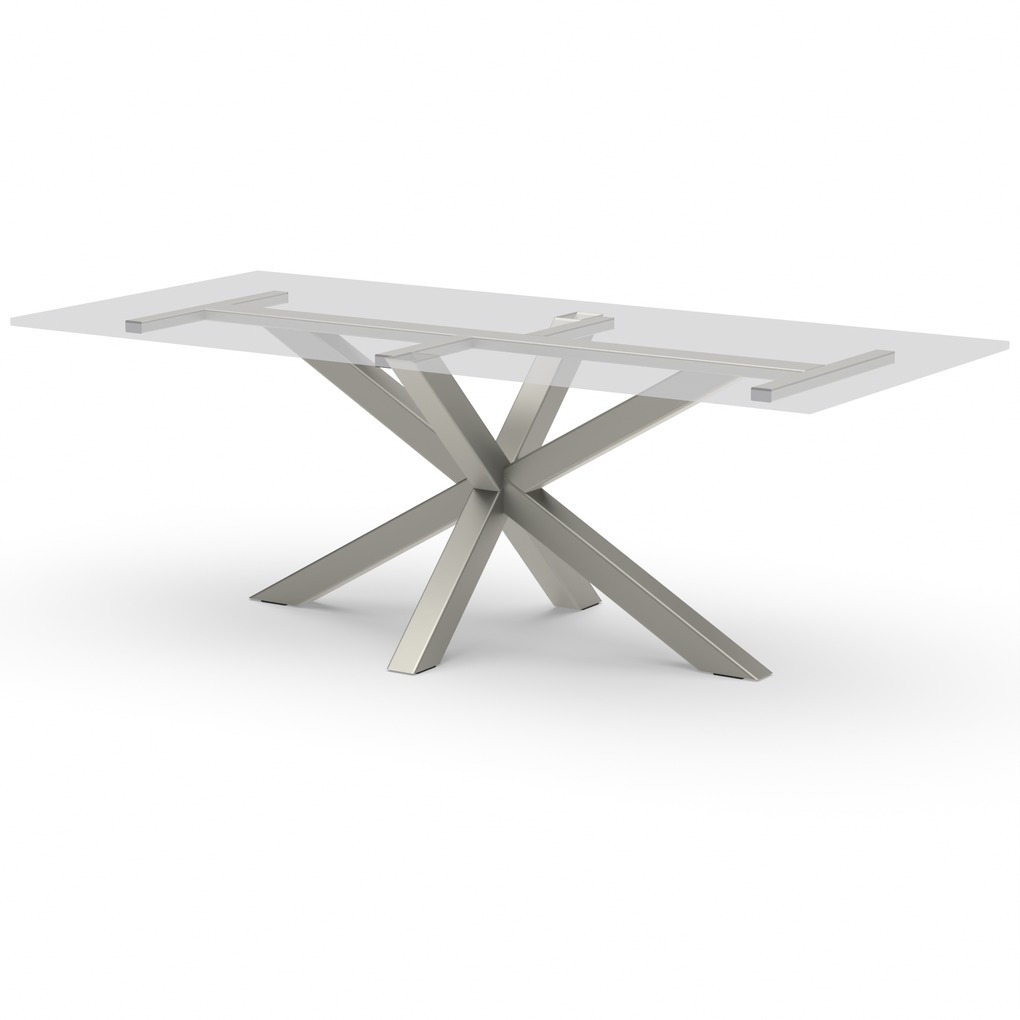
The base determines the character of the table just as strongly as the top does. You choose between powder coated steel in any colour you want, welded in our own workshop in Maasbree, Netherlands, or brushed 304 stainless steel. Compare the possibilities at the table bases, the steel table bases and the stainless steel table bases.
The choice between steel and stainless steel is aesthetic, not functional. Powder coated steel gets a fine texture finish in the colour you want, with the caveat that the lacquer layer can be damaged by heavy impact. Stainless steel 304 is corrosion resistant by nature and shows fingerprints, which are easy to remove with a cloth.
Would you like to judge colour and texture in your own dining room first? Then order material samples from € 2.50 per sample. The amount is refunded as soon as you return the samples, so you see the decor or the stain colour against your own floor and daylight, which a screen can never fully convey.
Care per material
Care differs considerably between the four materials. Ceramic asks the least: wiping down is enough and no treatment is needed, not even after years of use. Oak and walnut you wipe with a damp cloth, after which you rub the top dry.
Granite asks the most attention and the most discipline. Impregnate the top once you receive it and repeat that every two to three years, so that stains get no chance. Use pH neutral cleaners only and keep acidic products such as vinegar and lemon away from the surface.
For all materials it is sensible to use trivets under hot pans, with ceramic as the only exception. Never cut directly on the top, not even on stone. The full instructions per material are on the care page.
Advice, showroom and delivery
An oval table is best judged in real life. In the showroom in Maasbree you see the shapes next to each other, feel the difference between honed and polished granite and judge the grain of oak and walnut in daylight. The workshop in Maasbree, Netherlands, sits directly behind the showroom, so you can see how the bases are welded and finished.
Construction and finish carry a two year warranty. Delivery takes place throughout the Netherlands, Belgium and North Rhine-Westphalia (Germany), with free delivery on orders above €2500 in the Netherlands and Belgium. On delivery the table is carried inside and set down in the spot where it is going to stand.
If you already know the size you want, start straight away in the table configurator and see live what your choices cost. If you are still in doubt about shape or material, first compare the round dining tables and the Danish oval dining tables with this page. And if you cannot work it out on paper, our advisers will gladly think along with your floor plan.
Read moreRead less
Last updated: September 3, 2026