Ceramic table top: properties, thickness and care
A ceramic table top resists heat, scratches and stains, is 12 or 20 mm thick and comes in 29 colours. What it does well, its drawback and how to care for it.
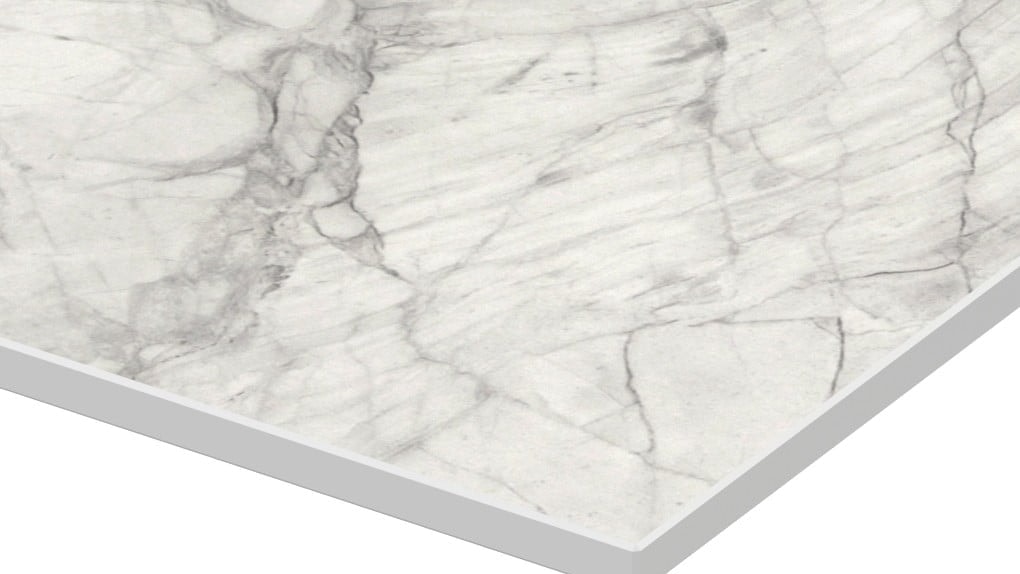
A ceramic table top is sintered at extremely high temperature: hard, virtually non-porous and resistant to heat, scratches and stains. It is 12 or 20 mm thick and comes in 29 colours. The drawback: ceramic is heavy and sensitive to a hard knock on the edge.
Quick guide
- Want a top with as little care as possible: choose ceramic.
- Need the top to work outdoors too: choose ceramic, which is frost-resistant and UV-resistant.
- Want natural stone with its own pattern: look at granite. Want warmth and grain: choose oak or walnut.
What a ceramic table top is
Ceramic is made from mineral raw materials sintered at extremely high temperature into one dense slab. The result absorbs less than 0.1% water. What does not soak in leaves no stain.
Properties of ceramic, and what they mean for you
- Heat-resistant: a warm dish leaves no ring or burn mark. Put a pan straight from the hob on a trivet.
- Scratch-resistant: cutlery, plates and keys leave no marks in normal use.
- Stain-resistant: red wine, coffee and turmeric wipe off with a damp cloth.
- UV-resistant: the colour does not change in the sun, indoors by the window or outside on the terrace.
- Frost-resistant: tested to EN ISO 10545-12, so the top can stay outdoors all year.
Thickness and colour
A ceramic table top is 12 mm or 20 mm thick. The thin top looks slim and light; the thicker one has a sturdier profile.
There are 29 colours, from light marble look to dark stone look. A colour on screen is never exactly what you see at home, so order material samples.
Caring for a ceramic table top
- Daily: a damp cloth, with a mild cleaning agent if needed.
- Grease or limescale: a pH-neutral cleaner, then dry with a dry cloth to avoid streaks.
- Periodically: nothing. Ceramic needs no sealing, oiling or lacquering.
Drawbacks of a ceramic table top
- Heavy: you do not move a ceramic table on a whim.
- The edge: a hard point load on the edge or corner can chip it.
- Cool and hard: the top feels cooler than wood and tableware sounds louder. Placemats help.
What you use a ceramic table top for
- Dining table: the piece of furniture used hardest every day. See the ceramic dining tables.
- Garden table: the same colour as indoors, out on the terrace. See the ceramic garden tables.
- Coffee table: rings from cups and glasses do not soak in. See the made-to-measure coffee tables.
- Loose top: already have a base? Order just the top from the ceramic table tops.
Under a ceramic top you choose steel in 10 standard colours or brushed stainless steel 304; the choice is aesthetic. The steel base is welded in the workshop in Maasbree, the Netherlands.
Ceramic compared with other materials
- Versus marble: a marble look in ceramic gives the appearance of marble, but it is virtually non-porous and stain-resistant.
- Versus wood: ceramic needs no care and can stand outdoors; oak and walnut cannot. Wood feels warmer and gains character.
- Versus granite: ceramic is thinner (12 or 20 mm against 30 mm) and needs no sealing. Granite is natural stone with its own pattern, but it is not heat-resistant. See ceramic or granite.
Frequently asked questions
How thick is a ceramic table top?
12 mm or 20 mm.
How do you care for a ceramic table top?
With a damp cloth and, if needed, a pH-neutral cleaner. No sealing or oiling needed.
What are the drawbacks of a ceramic table top?
It is heavy and sensitive to hard point loads on the edge. It also feels cooler than wood.
Can a ceramic table top stay outdoors?
Yes. Ceramic is frost-resistant (EN ISO 10545-12) and does not fade in sunlight.
How long does delivery take?
Delivery within 4 weeks, or at a lower rate within 8 weeks. Collection from Maasbree is also possible. You get a 2-year guarantee on construction and finish.


